The 2025-2026 CenterPoint Scholars focused on Communication and Connection. They contracted with Kate Elliott, associate lecturer of journalism at Ball State, to conduct a series of $20 interviews called “Twenty Forward.” Each month, Kate puts $20 in the hands of two Muncie residents and then writes about who or what they support with their modest but meaningful investment in our city. Read the project introduction to learn more.
Level up your civic engagement
Muncie Waypoint Program turns civic engagement into a tangible, rewarding challenge
By Kate H. Elliott
- Sign up for a city newsletter: 5 points.
- Host a neighborhood gathering: 20 points.
- Give a friend a ride to the polls on election day: 30 points.
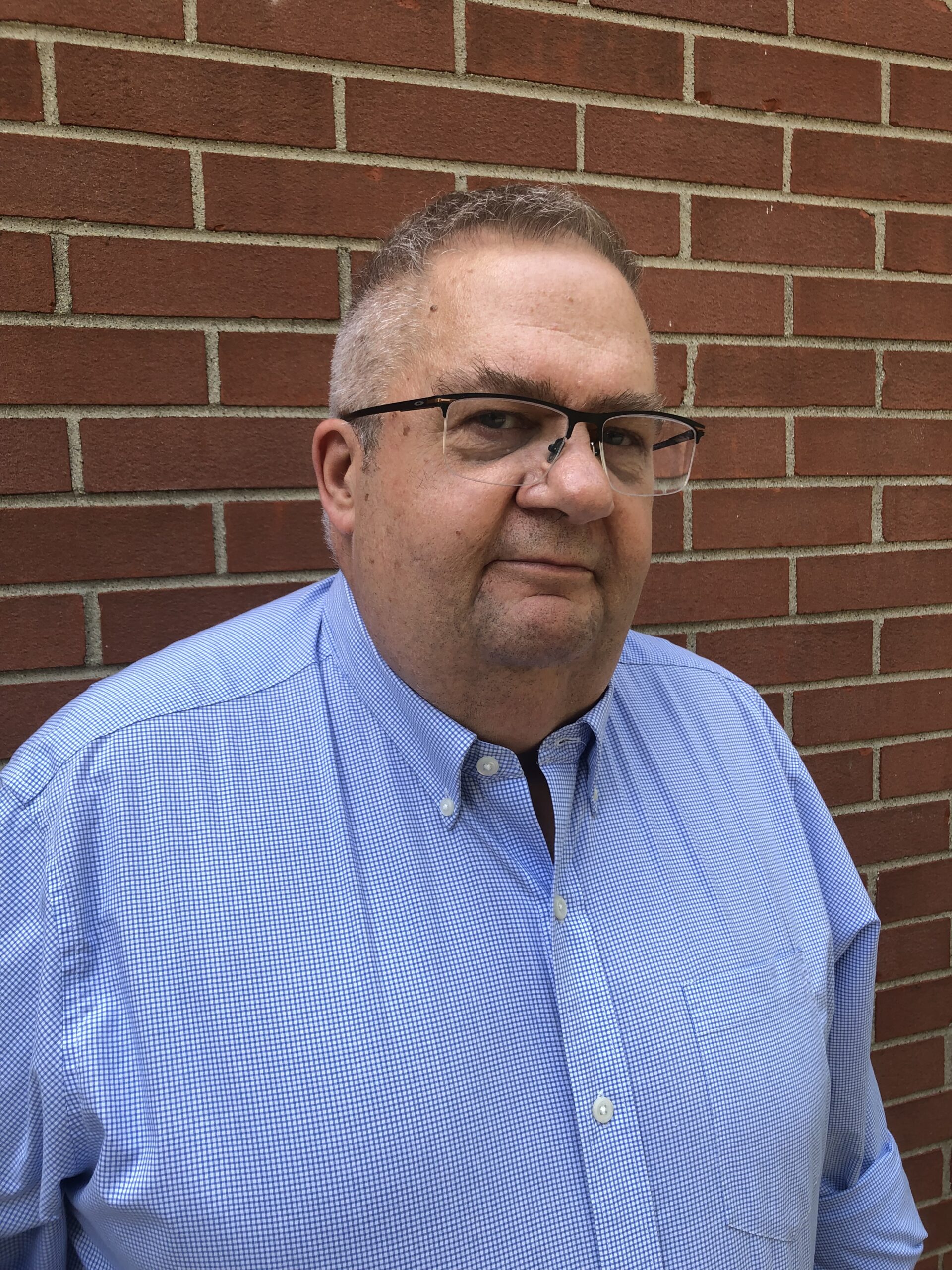
Politics have long been compared to a game, and Charles “Chip” Taylor is inviting you to make the next move.
In February, the political science professor emeritus created the Muncie Waypoint Civic Engagement Program on Substack — an online publishing platform that allows users to post content and email subscribers.
“Local politics is where our individual voices matter most,” said Taylor, who taught at Ball State for 16 years after a career as an engineer in local government. “I figured that if I could energize my neighbors in a fun way, I could help strengthen the community and improve lives.”
Muncie Waypoint’s homepage features informative posts about how to volunteer with a political party, host a candidate meet-and-greet, and navigate political disagreements with loved ones. Its about page explains the Muncie Waypoint game — to turn civic engagement into a tangible, rewarding challenge.
From Base camp to the Summit
Here’s how it works: Subscribe to Muncie Waypoint for free, and you begin at “Base Camp.” From there, choose activities from three categories — learn, building community, and influence. Each activity is assigned points that you log to advance to the Trail Head, Outpost, Ridge and Summit levels.
“We hold a celebration for those who achieve Trail Head status,” Taylor said. “It’s a way for us to connect with each other in person and to honor engagement in important community decisions and civic action.”
Under the “learn” heading, you can pick up five points for following a local government or news outlet on social media, 10 points for attending a candidate forum, and 20 points for summarizing an issue discussed at a public meeting.
The “build community” category includes 20-point activities such as hosting a neighborhood game night or volunteering two hours for a local organization. “Influence” offers points for registering to vote, offering input at a public meeting, and contacting a representative to ask a question or raise a concern.
Each month, Taylor posts a list of upcoming civic meetings and events, to which he also assigns points. A monthly “Leaderboard” recognizes participants for their civic engagement and consistency. Taylor emails these and other posts to people who opt-in to his monthly e-newsletter.
“Improving the performance of the public sector, especially at the local level, is one of the most pressing issues facing the country today,” said Taylor, who also served as director of Ball State’s Bowen Center for Public Affairs from 2017-21. “A lot of information is shared on social media, and that is fine, but we need to push ourselves to get out into the community and meet with representatives and talk through issues in person.”
Turning neighbors into civic leaders
Muncie Waypoint is not Taylor’s only civic project since retiring in 2024. He helped create the CenterPoint Scholars program, which invites 10 Muncie residents each year to engage in leadership training focused on enhancing the quality of life in their neighborhoods.
Scholars commit to attending monthly meetings and a two-day retreat in April as they collaborate to address issues in Muncie’s neighborhoods. Upon successful completion of the program, Scholars receive $500 through support from CenterPoint Energy and the City of Muncie. Program partners are Muncie Action Plan, Shafer Leadership Academy, 8twelve Coalition, Habitat for Humanity, and Ball State’s Office of Community Engagement and Bowen Center for Public Affairs.
“It’s inspiring to see neighbors go through the program to learn about available resources and gain the skills and confidence to make real change where they live,” he said. “Maybe the best part about it is seeing them meet regularly to share ideas and network with other neighborhood leaders. They realize the power and possibilities in civic engagement.”
His $20 investment
When given $20 to spend in the community, Taylor gave it to an effort that emerged from the first CenterPoint Scholars cohort in 2024.
Several of the inaugural scholars founded the 5:50 Alliance to combat food insecurity. Among their efforts is a free food fridge at the Common Market on Eighth Street.
“The 5:50 Alliance aims to provide meat and other fresh proteins and produce to people in need, no questions asked,” Taylor said. “Giving them my $20 is an investment in their collaborative, grass-roots spirit of civics to address a problem, namely eliminating barriers to access. They listened to their community and dedicated themselves to coming up with a solution. Their work is making a difference, and that is what all these efforts I’m part of are trying to inspire.”
The alliance accepts donations and partners with Second Harvest Food Bank of East Central Indiana to keep the fridge stocked and offer non-perishable food items. To learn more, volunteer or donate, contact CenterPoint Scholar, Napolean Price, at napoleonprice7@gmail.com. Monetary donations can be made directly to curehunger.org; donors should mention the 5:50 Alliance at the Common Market.
Establishing ethics and showing up
Taylor also helped create and serves on the Muncie Ethics Commission, on which he continues to serve. The commission meets monthly to implement and uphold the city’s Code of Ethics.
Taylor’s expertise guided creation of the ethical standards expected of city officials and employees. The code addresses conflicts of interest, gifts, misuse of public office or confidential information, outside employment, nepotism, and other rules intended to ensure government decisions are made impartially and in the public interest.
In that spirit, Taylor goes to most Muncie City Council meetings. It’s important, he said, for elected officials and employees to see residents in the room and know that people care about and keep track of their decisions.
“We have become such a hyper individualistic society, but we need each other — in person, talking face-to-face,” he said. “You can’t replace that personal collaboration and debate, and we can’t read about city meetings in the newspaper anymore, so I go and see a bunch of the other engaged citizens who also go, and I love having those micro interactions with neighbors.”
He is building a database of Muncie City Council members’ votes and meeting attendance. The goal, he said, is to give residents another way to understand how their elected officials participate in local government and to make public decision-making easier to follow. The council vote records will inform an upcoming post at Muncie Policy Memo, his recently launched Substack newsletter.
“Voting and registering to vote is important, but there is a lot of politics and that happens outside of and in between elections. For instance, the County Commissioners held a hearing about a potential new property tax, and a bunch of their constituents showed up to express concern, so the commissioners voted it down,” he recalled. “Now, it doesn’t always go your way, but who knows if you don’t show up and use your voice.”
Muncie Waypoint and other online resources and forums can help residents stay informed, Taylor said, but they cannot replace face-to-face connections. “I appreciate that people share their views online, but social media posts aren’t really going to change much,” he said. “Eventually, you need to get out and talk to others and your elected officials. Most people and public servants are receptive, I promise.”
Always a teacher
Why doesn’t Taylor run for office?
“Not everyone can or should be President of the United States. There are lots of roles and paths to serving your community. I ran for office in Missouri decades ago, and I realized it wasn’t for me. Teaching and creating programs is my lane, and I encourage everyone to find their way to invest and connect.”
Taylor doesn’t talk much about his publications or awards. He talks about the former students and Muncie neighbors he has seen grow through civic engagement and dedicate themselves to improving communities.
“Throughout my career and now in retirement, my focus has remained on preparing others for public service that suits them,” he said. “I taught my students that political science isn’t just a bunch of theories; it’s about applying those concepts to making the world a better place in your own way.
“And through programs, I encourage and empower neighbors to maybe take that first step into civic engagement, and then they see how a little becomes a lot. And if they don’t aspire to anything grander than improving their neighborhood, that is just fine. Imagine if everyone set out to make positive change in small ways like planting a lovely garden, creating and sharing a voter guide, or putting up a Free Little Library. Those matter.”
Taylor said he hopes others join the charge to change Muncie’s narrative. “This town has a lot of authenticity and heart, and there are a lot of people and organizations out there who need your help,” he added.
To learn more about Muncie Waypoint, go to munciewaypoint.substack.com. Signing up is free and easy.
Thank you to Muncie Action Plan and CenterPoint Scholars for supporting these small but meaningful investments in community. Go to Twenty Forward to read this and other stories about what your neighbors are doing with $20.