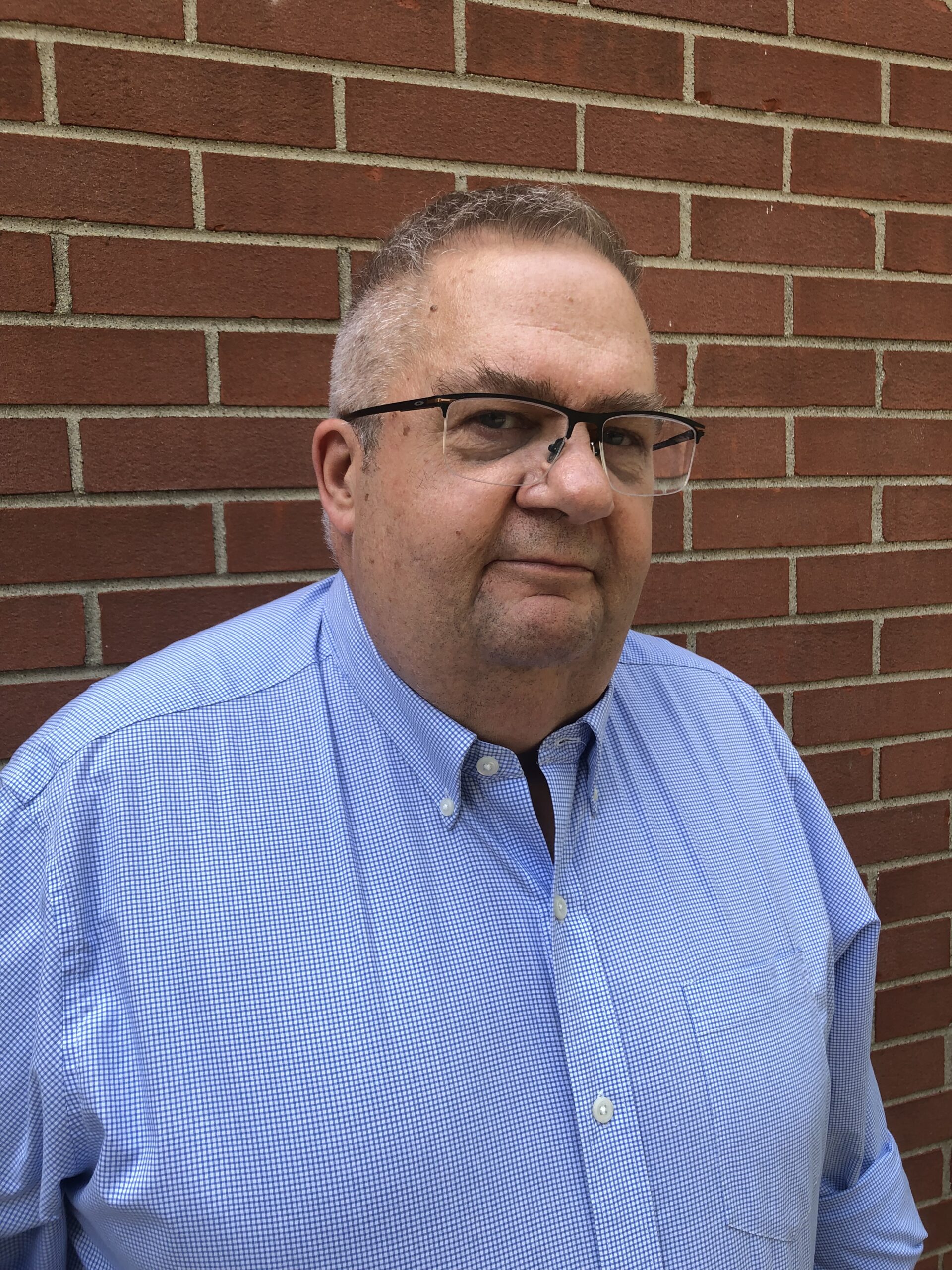
Twenty Forward > Chip Taylor

twenty forward header image

The 2025-2026 CenterPoint Scholars focused on Communication and Connection. They contracted with Kate Elliott, associate lecturer of journalism at Ball State, to conduct a series of $20 interviews called “Twenty Forward.” Each month, Kate puts $20 in the hands of two Muncie residents and then writes about who or what they support with their modest but meaningful investment in our city. Read the project introduction to learn more.


Level up your civic engagement

Muncie Waypoint Program turns civic engagement into a tangible, rewarding challenge
By Kate H. Elliott

  • Sign up for a city newsletter: 5 points.
  • Host a neighborhood gathering: 20 points.
  • Give a friend a ride to the polls on election day: 30 points.

Politics have long been compared to a game, and Charles “Chip” Taylor is inviting you to make the next move.

In February, the political science professor emeritus created the Muncie Waypoint Civic Engagement Program on Substack — an online publishing platform that allows users to post content and email subscribers.

“Local politics is where our individual voices matter most,” said Taylor, who taught at Ball State for 16 years after a career as an engineer in local government. “I figured that if I could energize my neighbors in a fun way, I could help strengthen the community and improve lives.”

Muncie Waypoint’s homepage features informative posts about how to volunteer with a political party, host a candidate meet-and-greet, and navigate political disagreements with loved ones. Its about page explains the Muncie Waypoint game — to turn civic engagement into a tangible, rewarding challenge.

From Base camp to the Summit

Here’s how it works: Subscribe to Muncie Waypoint for free, and you begin at “Base Camp.” From there, choose activities from three categories — learn, building community, and influence. Each activity is assigned points that you log to advance to the Trail Head, Outpost, Ridge and Summit levels.

“We hold a celebration for those who achieve Trail Head status,” Taylor said. “It’s a way for us to connect with each other in person and to honor engagement in important community decisions and civic action.”

Under the “learn” heading, you can pick up five points for following a local government or news outlet on social media, 10 points for attending a candidate forum, and 20 points for summarizing an issue discussed at a public meeting.

The “build community” category includes 20-point activities such as hosting a neighborhood game night or volunteering two hours for a local organization. “Influence” offers points for registering to vote, offering input at a public meeting, and contacting a representative to ask a question or raise a concern.

Each month, Taylor posts a list of upcoming civic meetings and events, to which he also assigns points. A monthly “Leaderboard” recognizes participants for their civic engagement and consistency. Taylor emails these and other posts to people who opt-in to his monthly e-newsletter.

“Improving the performance of the public sector, especially at the local level, is one of the most pressing issues facing the country today,” said Taylor, who also served as director of Ball State’s Bowen Center for Public Affairs from 2017-21. “A lot of information is shared on social media, and that is fine, but we need to push ourselves to get out into the community and meet with representatives and talk through issues in person.”

Turning neighbors into civic leaders

Muncie Waypoint is not Taylor’s only civic project since retiring in 2024. He helped create the CenterPoint Scholars program, which invites 10 Muncie residents each year to engage in leadership training focused on enhancing the quality of life in their neighborhoods.

Scholars commit to attending monthly meetings and a two-day retreat in April as they collaborate to address issues in Muncie’s neighborhoods. Upon successful completion of the program, Scholars receive $500 through support from CenterPoint Energy and the City of Muncie. Program partners are Muncie Action Plan, Shafer Leadership Academy, 8twelve Coalition, Habitat for Humanity, and Ball State’s Office of Community Engagement and Bowen Center for Public Affairs.

“It’s inspiring to see neighbors go through the program to learn about available resources and gain the skills and confidence to make real change where they live,” he said. “Maybe the best part about it is seeing them meet regularly to share ideas and network with other neighborhood leaders. They realize the power and possibilities in civic engagement.”

His $20 investment

When given $20 to spend in the community, Taylor gave it to an effort that emerged from the first CenterPoint Scholars cohort in 2024.

Several of the inaugural scholars founded the 5:50 Alliance to combat food insecurity. Among their efforts is a free food fridge at the Common Market on Eighth Street.

“The 5:50 Alliance aims to provide meat and other fresh proteins and produce to people in need, no questions asked,” Taylor said. “Giving them my $20 is an investment in their collaborative, grass-roots spirit of civics to address a problem, namely eliminating barriers to access. They listened to their community and dedicated themselves to coming up with a solution. Their work is making a difference, and that is what all these efforts I’m part of are trying to inspire.”

The alliance accepts donations and partners with Second Harvest Food Bank of East Central Indiana to keep the fridge stocked and offer non-perishable food items. To learn more, volunteer or donate, contact CenterPoint Scholar, Napolean Price, at napoleonprice7@gmail.com. Monetary donations can be made directly to curehunger.org; donors should mention the 5:50 Alliance at the Common Market.

Establishing ethics and showing up

Taylor also helped create and serves on the Muncie Ethics Commission, on which he continues to serve. The commission meets monthly to implement and uphold the city’s Code of Ethics.

Taylor’s expertise guided creation of the ethical standards expected of city officials and employees. The code addresses conflicts of interest, gifts, misuse of public office or confidential information, outside employment, nepotism, and other rules intended to ensure government decisions are made impartially and in the public interest.

In that spirit, Taylor goes to most Muncie City Council meetings. It’s important, he said, for elected officials and employees to see residents in the room and know that people care about and keep track of their decisions.

“We have become such a hyper individualistic society, but we need each other — in person, talking face-to-face,” he said. “You can’t replace that personal collaboration and debate, and we can’t read about city meetings in the newspaper anymore, so I go and see a bunch of the other engaged citizens who also go, and I love having those micro interactions with neighbors.”

He is building a database of Muncie City Council members’ votes and meeting attendance. The goal, he said, is to give residents another way to understand how their elected officials participate in local government and to make public decision-making easier to follow. The council vote records will inform an upcoming post at Muncie Policy Memo, his recently launched Substack newsletter.

“Voting and registering to vote is important, but there is a lot of politics and that happens outside of and in between elections. For instance, the County Commissioners held a hearing about a potential new property tax, and a bunch of their constituents showed up to express concern, so the commissioners voted it down,” he recalled. “Now, it doesn’t always go your way, but who knows if you don’t show up and use your voice.”

Muncie Waypoint and other online resources and forums can help residents stay informed, Taylor said, but they cannot replace face-to-face connections. “I appreciate that people share their views online, but social media posts aren’t really going to change much,” he said. “Eventually, you need to get out and talk to others and your elected officials. Most people and public servants are receptive, I promise.”

Always a teacher

Why doesn’t Taylor run for office?

“Not everyone can or should be President of the United States. There are lots of roles and paths to serving your community. I ran for office in Missouri decades ago, and I realized it wasn’t for me. Teaching and creating programs is my lane, and I encourage everyone to find their way to invest and connect.”

Taylor doesn’t talk much about his publications or awards. He talks about the former students and Muncie neighbors he has seen grow through civic engagement and dedicate themselves to improving communities.

“Throughout my career and now in retirement, my focus has remained on preparing others for public service that suits them,” he said. “I taught my students that political science isn’t just a bunch of theories; it’s about applying those concepts to making the world a better place in your own way.

“And through programs, I encourage and empower neighbors to maybe take that first step into civic engagement, and then they see how a little becomes a lot. And if they don’t aspire to anything grander than improving their neighborhood, that is just fine. Imagine if everyone set out to make positive change in small ways like planting a lovely garden, creating and sharing a voter guide, or putting up a Free Little Library. Those matter.”

Taylor said he hopes others join the charge to change Muncie’s narrative. “This town has a lot of authenticity and heart, and there are a lot of people and organizations out there who need your help,” he added.

To learn more about Muncie Waypoint, go to munciewaypoint.substack.com. Signing up is free and easy.


Thank you to Muncie Action Plan and CenterPoint Scholars for supporting these small but meaningful investments in community. Go to Twenty Forward to read this and other stories about what your neighbors are doing with $20.

Twenty Forward > Cathy Lee

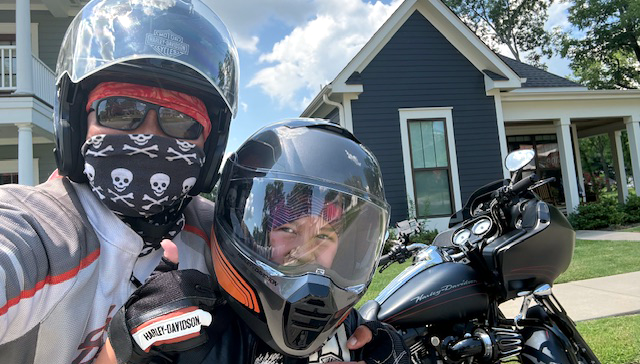
A woman and a child taking a selfie on a motorcycle in front of some houses. Both are smiling and wearing helmets.

The 2025-2026 CenterPoint Scholars focused on Communication and Connection. They contracted with Kate Elliott, associate lecturer of journalism at Ball State, to conduct a series of $20 interviews called “Twenty Forward.” Each month, Kate puts $20 in the hands of two Muncie residents and then writes about who or what they support with their modest but meaningful investment in our city. Read the project introduction to learn more.


After tragedy, she chose a life without limits

By Kate H. Elliott

A smiling woman and child taking a selfie against a beautiful beach backdrop

Her younger brother played on the deck while 10-year-old Cathy Lee Arcuino splashed in their backyard pool. “Watch your brother,” her mom said, and she did — until she pulled his limp, 2-year-old body from beneath the surface.

For the next 16 years, Cathy Lee helped her parents clean Rey John’s trach, flush his G-tube and more for eight hours a day before handing off his care to a privately paid nurse for the remaining 16.

“I knew he would never wake up, but I think my mother always held out hope,” Cathy Lee said. “I will never know, though. My parents immigrated to the United States from the Philippines, and in our culture, you don’t talk about it. It was all around us, but we never talked about it.”

When she graduated high school, Cathy Lee desperately wanted to leave Fresno (California). She felt trapped — every day at home was a reminder that Rey John drowned on her watch. She did move a few hours away for college but drove six hours every weekend to return to Rey John. One day, she sat beside him and made a pact: “’Please let me go into the Peace Corps,’ I asked him. ‘Then I will come back and fulfil my duty to watch you.’ I don’t know that he heard me, but I felt a peace about going, so I did.”

Cathy Lee boarded a plane for Kazakhstan to live in a remote village, where she “pooped in a hole and wiped my ass with the pages of a Russian book that you’d throw into a basket to burn later for heat.”

A year and a half into her service, Cathy Lee learned that Rey John died.

“It rocked my world,” she said. “But I began to wonder if it was almost a gift to me because he knew I wanted to get out and live — for me and for him. I made a pledge to never live in a coma, to walk around mindlessly like so many people do. I wanted to do something with my life, so I live big and in my own way, bringing Rey John with me everywhere I go. He’s my guardian angel.”

Since then, Cathy Lee has traveled to more than 50 countries, worked for a nonprofit in Kyrgyzstan and taught English in Poland, Thailand and Japan. She rides her Harley across the country, wears clothes with skulls, jewels or both, and collects tattoos that tell the story of her life.

By 35, Cathy Lee had earned a Ph.D. in educational leadership. The following year, she decided she wanted to have a daughter: “I didn’t want a relationship, so I asked my gay best friend, David, to donate his sperm.” A year later, Mirasol, was born.

“Her name means ‘Sun-watcher and sunflower,’ and my nickname for David was ‘Sunflower’ since we met in the Sunflower State (Kansas),” Cathy Lee said. “Mirasol is bright like a sunflower, so her name fits her.”

Mirasol makes her mother proud: “She’s 10 and rocks a pixie cut, has traveled with me to 23 countries, and, in January, won the Martin Luther King Jr. Award for exemplifying the qualities of MLK Jr.”

The two have moved to four states as Cathy Lee has built a career in international education, eventually landing at Ball State University as executive director of Graduate & International Admissions and Services.

“I oversee Ball State’s graduate and international admissions and supports international students before, during and after enrollment,” she explained. “I love and live for working with students — both helping international students adjust to life and learning in the United States and helping American students explore overseas.”

Cathy Lee will invest her $20 in Ball State’s Rinker Center for Global Affairs to support students studying abroad. Pushing out of one’s comfort zone is Cathy Lee’s greatest advice to students: “It might be community service in your town, a mission trip to a Native American reservation or a study abroad experience. These all provide you with opportunities to get outside yourself, which enriches your life in unimaginable ways.”

The more different the experience is from your life, the better, she said. “Go to a country that speaks another language or go poop in that hole,” she said. “Those experiences test you, stretch you and often make you more grateful and resilient and interesting.”

Then, she tells students to make a difference — not necessarily in a big way but in some way. “Sometimes the small things are the big things,” she said, “Don’t minimize showing up for people or helping neighbors and loved ones. We can all do good and be good.”

And when others aren’t good to you, lead with questions, she advises, after a lifetime of people assuming she can’t speak English or is not from America. At a Kansas grocery store, a woman asked her, ‘Where is the rice you all cook in China, and how do you cook it?”

“I have learned to respond with questions or a story so people can better understand my experience or stance,” she said. “I’ve found that approach leads to more empathy and understanding.”

Cathy Lee gathers stories through travel and connections with others. “This is why I love my job,” she said. “Every day, I get to talk with students, hear their stories, and empower them and provide support. I get to watch them dream and go and grow.

Those meaningful connections are Cathy Lee’s way of “doing good” in the world. “I wasn’t able to make a connection with my brother, so I make connections with others and the world. That passion for life and people helps me make meaning of tragedy.”


Thank you to Muncie Action Plan and CenterPoint Scholars for supporting these small but meaningful investments in community. Go to Twenty Forward to read this and other stories about what your neighbors are doing with $20.

Twenty Forward > Tracina Greenleaf

twenty forward header image

The 2025-2026 CenterPoint Scholars focused on Communication and Connection. They contracted with Kate Elliott, associate lecturer of journalism at Ball State, to conduct a series of $20 interviews called “Twenty Forward.” Each month, Kate puts $20 in the hands of two Muncie residents and then writes about who or what they support with their modest but meaningful investment in our city. Read the project introduction to learn more.


‘They never had the boots’: Trae Greenleaf champions dignity, housing and hope for Central Indiana families

By Kate H. Elliott

A black and white headshot of Trae Greenleaf, a black woman with a slight smile in a white blouse complimented by black jewelry.

Tracina Greenleaf introduces herself like this:

“My name is Tracina, but people call me ‘Trae,’ which stands for Transition, Reform, Advocate and Educate. That’s my name, and it’s what I stand for.”

As operations manager for the YWCA Central Indiana, Trae spoke with Ball State students about the organization’s work to eliminate racism, empower women, promote social justice and help families in the seven counties it serves.
“Our residents are your friends, your grandmother. They are me and you, and they — like all of us — deserve respect and dignity,” she said.

Trae gave an example. She often does — because in her line of work, examples remind people of their shared humanity. She’s not talking about abstract concepts like “poverty,” “assault” or “hunger.” She is talking about people.

“We recently had some high school students stay with us — a set of twins at Muncie Central and a young woman at Delta. You would have never known they were unhoused,” she said. “They were popular, engaging — the whole nine yards. We helped them go to prom and had graduation parties for them here at the YWCA. We told them, ‘You don’t need to tell people you are staying upstairs, just that you rented a room here for the party.’”

Trae got teary, and so did the students.

“One of those kids is now in nursing school and working for a congress person,” she added. “She’s doing really well — one of our success stories.”

More than 40% of those served at the YWCA Central Indiana are between the ages of 0 and 17, according to the organization.

Trae and her staff do “anything and everything” for more success stories among the roughly 600 people they serve each year. The YWCA partners with Ball State, Ivy Tech, Meridian Health Services and more to provide mental and social support to those in need. They provide education about financial literacy, housing, healthcare and professional development. They also meet basic needs for clothing, food and daily essentials.

“We are the only residential stay program for women in seven counties, and we are the state’s only YWCA that accepts mothers with sons over age 10 into its emergency shelter and temporary stay programs,” she said. “We are committed to keeping families together.”
Trae and Executive Director, WaTasha Barnes Griffin, fill their calendars speaking to clubs, churches and schools to advocate for the organization’s mission and to spread awareness about needs in the region. They join their staff at informational tables and benefit walks. They stock shelves, help women budget, and read bedtime stories to the YWCA’s youngest residents.

“We will stop when the work is done,” Trae said, “and the work will never be ‘done.’”
Learn more about the YWCA Central Indiana at ywcacentralindiana.org. The site includes a donation list, information about upcoming events and ways to get involved.
Not everyone has the same opportunities or access, she told the students. “So, when people say or think our residents should just ‘pull themselves up by their bootstraps,’ I say, ‘They never had the boots, let alone the straps.’”

Trae cares about all the nonprofit’s priorities, but she is especially focused on affordable housing. For every 100 extremely low-income renters in Indiana, only 38 affordable and available housing options exist, according to Prosperity Indiana and the National Low Income Housing Coalition. Nationally, more than a third of extremely low-income renters work, another third are seniors, and many have a disability or are students and caregivers.

“People who struggle to pay rent also tend to have trouble paying for other basic necessities — often sacrificing things like food, healthcare or childcare to have place to live,” Trae said. “And then, a car accident or unexpected medical bill prevents them from going to work, and then they are out on the street or bouncing from couch to couch. A warm home is the foundation for a stable life.”

A student raised her hand: “What can we do?”

Trae didn’t hesitate: “Vote.”

“I won’t tell you who or what to vote for, but I will tell you to vote based on the interests of your family and your community,” she added. “Yes, of course, you can volunteer and donate and spread awareness, but you — we all — have the greatest impact with our vote to set the priorities for our government.”

Trae is giving her $20 donation to support the YWCA, but what can $20?

“More than you think,” Trae said. “Every donation — just like every bottle of shampoo — helps. Everyone can make a difference in their own way. Too many people don’t give of their time, talents or money because they don’t think it’s enough. It is.”

Learn more about the YWCA Central Indiana at ywcacentralindiana.org or check them out on Facebook and Instagram.

Thank you to Muncie Action Plan and CenterPoint Scholars for supporting these small but meaningful investments in community. Go to Twenty Forward to read this and other stories about what your neighbors are doing with $20.
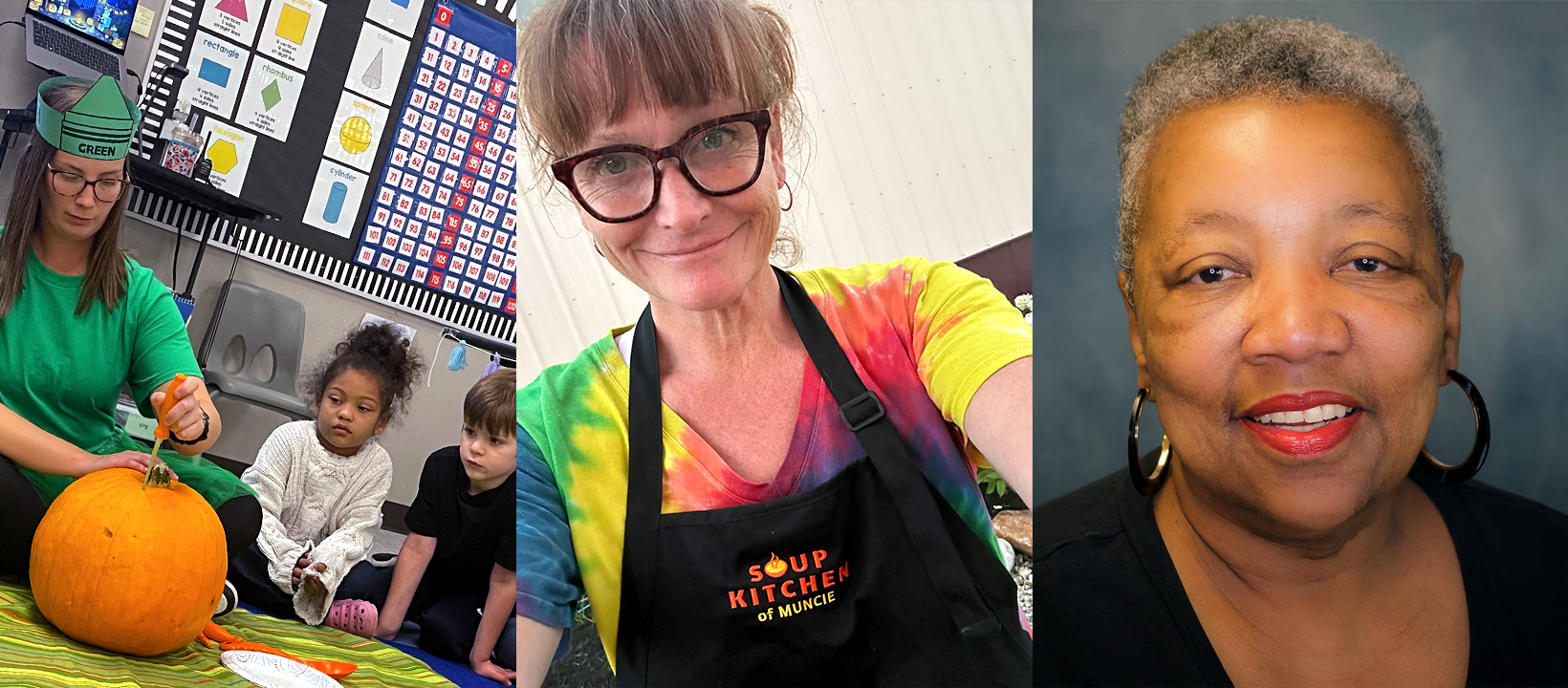
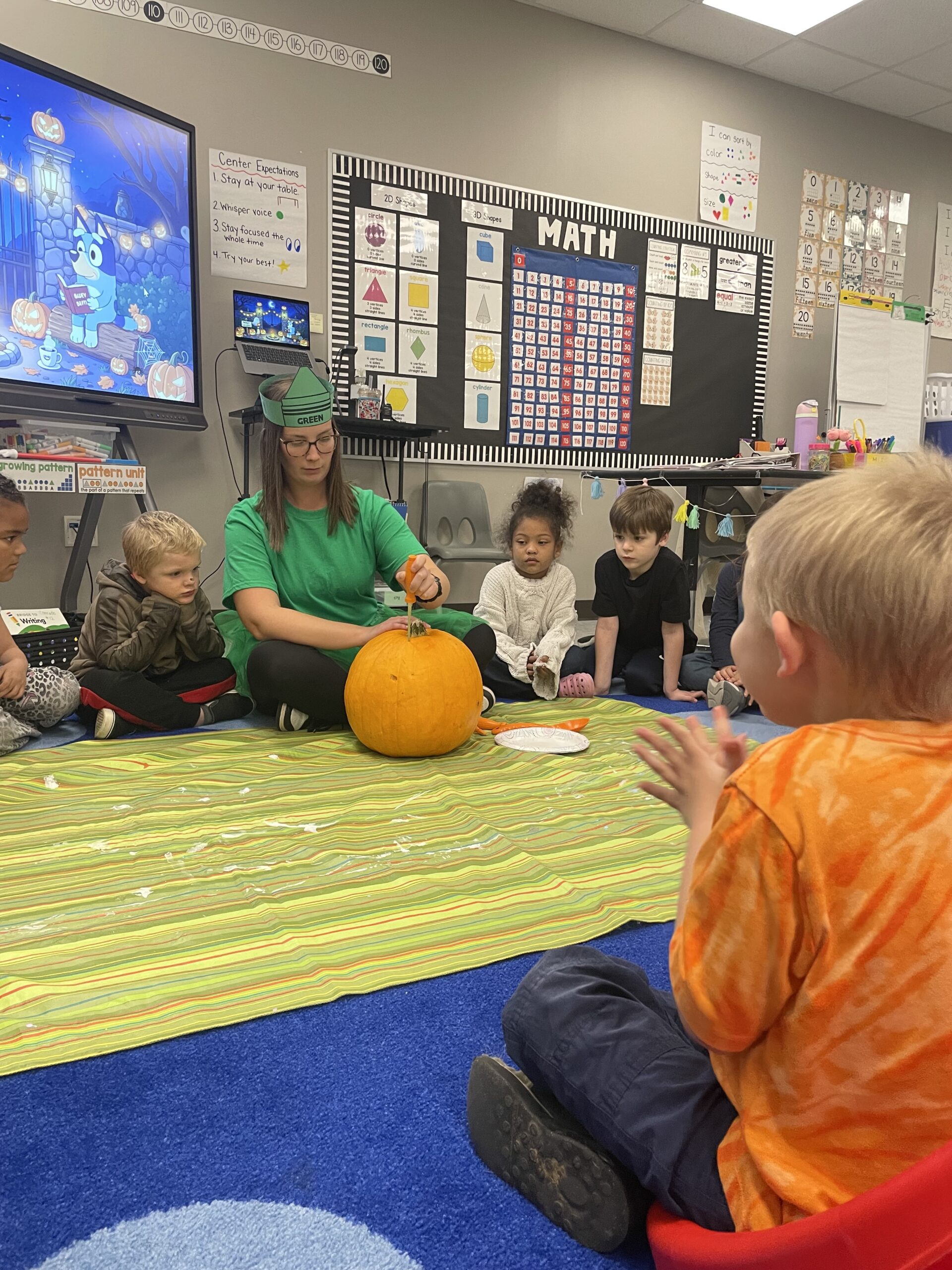
Mary Kult sits on a colorful floor surrounded by attentive children who watch her carve a pumpkin

Mary Kult

Rooted in love

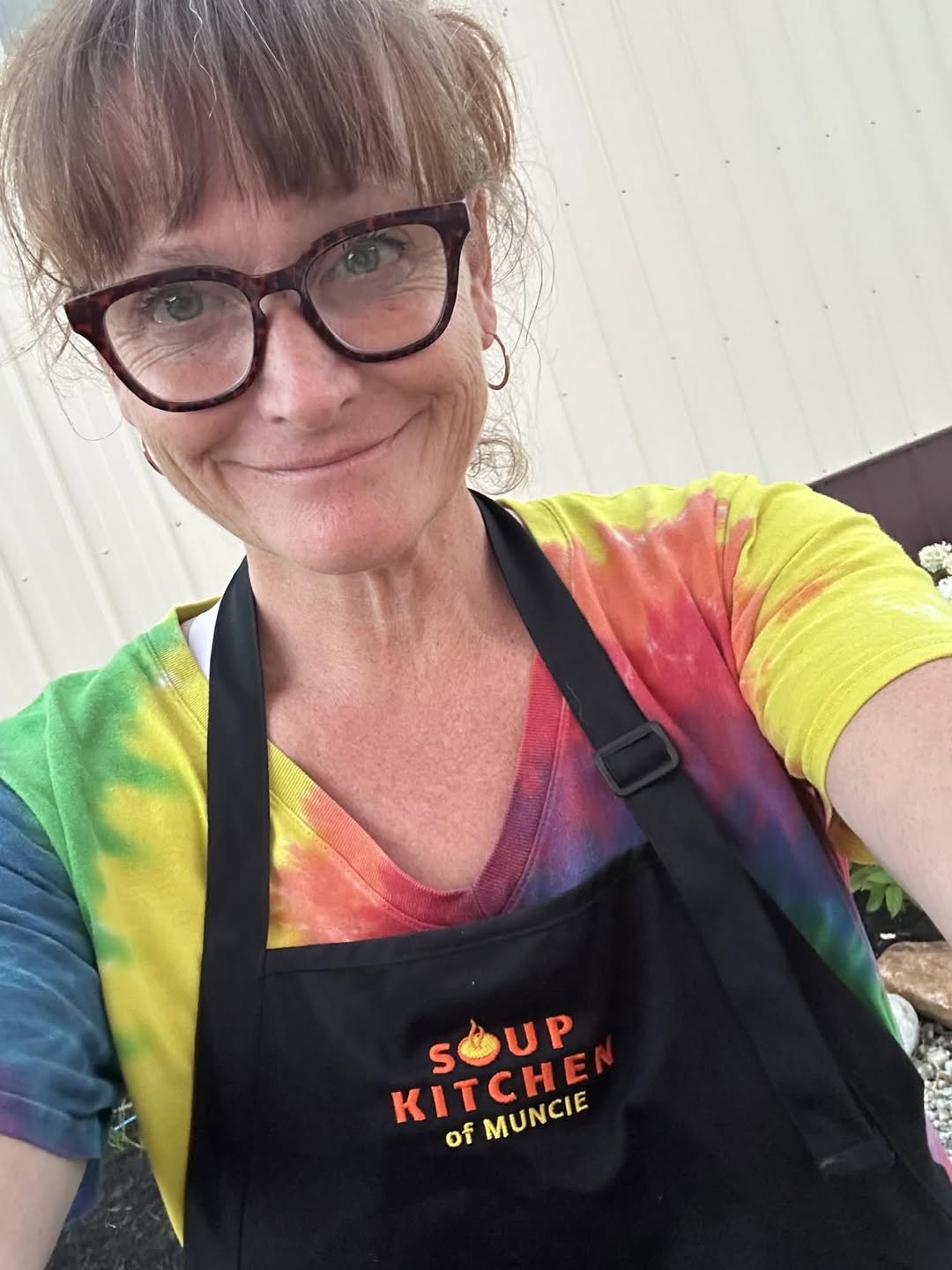
Christiana Mann selfie - she is wearing a rainbow tie dye shirt under a black apron with a "Soup Kitchen of Muncie" logo on it.

Christiana Mann

Hospitality with heart

Twenty Forward > Yvonne Thompson

twenty forward header image

The 2025-2026 CenterPoint Scholars focused on Communication and Connection. They contracted with Kate Elliott, associate lecturer of journalism at Ball State, to conduct a series of $20 interviews called “Twenty Forward.” Each month, Kate puts $20 in the hands of two Muncie residents and then writes about who or what they support with their modest but meaningful investment in our city. Read the project introduction to learn more.


From Longfellow to leadership: Yvonne Thompson’s commitment to Muncie children

By Kate H. Elliott

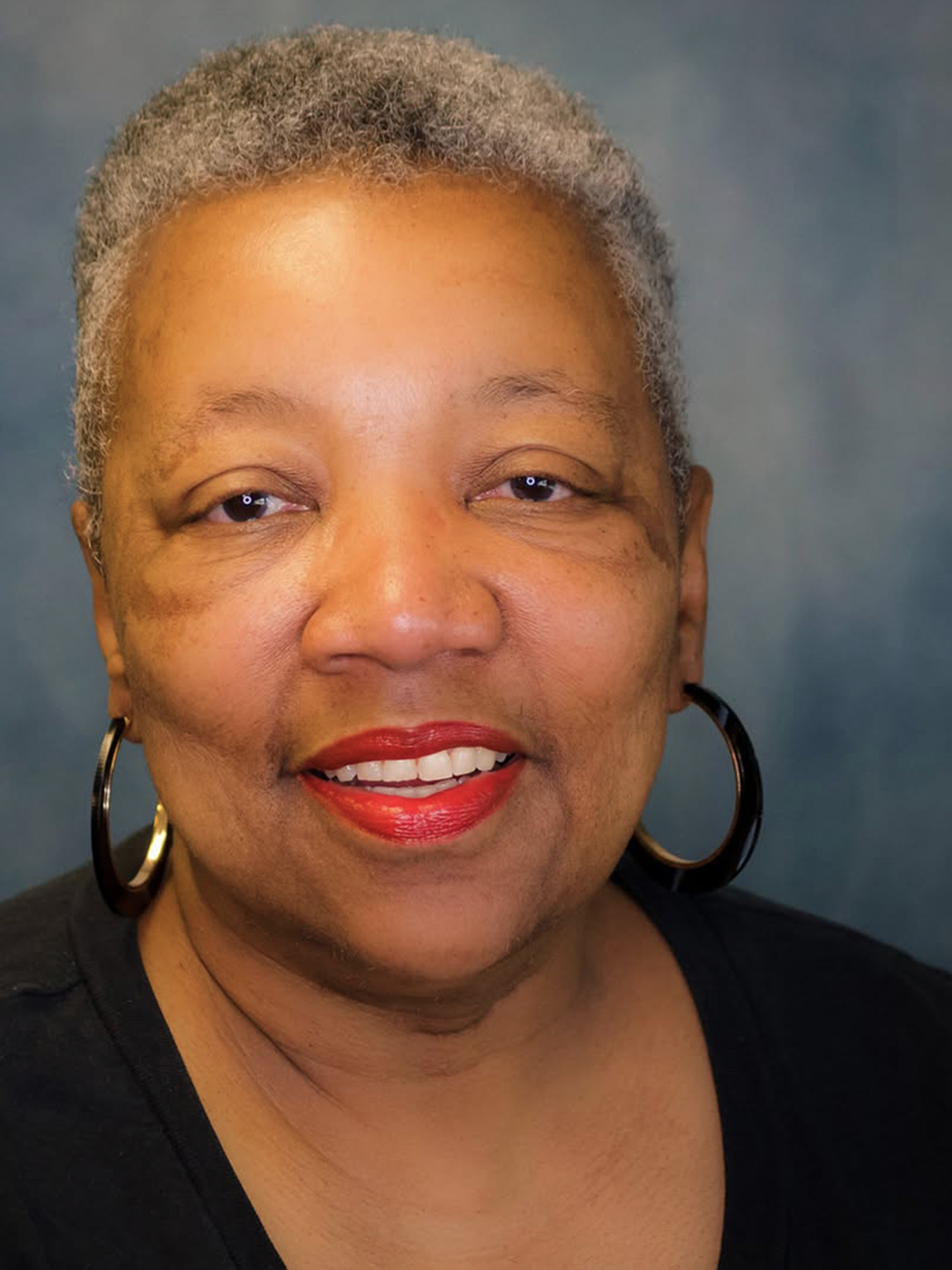
Headshot of Yvonne Thompson, a black woman with a bright smile wearing a black shirt and black and gold hoop earrings on a gray/blue background

Yvonne Thompson loved first grade. She’d wake to homemade biscuits and margarine before walking past her daddy’s service station to Longfellow Elementary. Mrs. Mary Dollison was there to greet Yvonne with a smile. “Mrs. Dollison cared for us deeply and made learning come to life,” Yvonne said. “She knew education was the key to our success, and she believed we were capable of greatness.”

Yvonne and others saw themselves in Dollison, who looked like them, went to church with some of them, and lived in their neighborhood. “Representation matters,” Yvonne said. “As a Black child in 1964, it was empowering to have a Black teacher.”

At the time, Longfellow and Garfield elementaries were the only two of Muncie’s 15 elementary schools that employed Black teachers, and Longfellow made history by hiring the city’s first Black teacher in 1952 and first Black administrator in 1956. Yvonne was proud to attend a school with those “milestones of progress,” she said.

Years later, when Yvonne returned to Muncie in 2005, she reconnected with Dollison, who had gone on to establish (alongside Rashana Shabazz) Motivate our Minds — a nonprofit that offers year-round academic achievement and enrichment programs for children and families. Her former teacher, now a driving force in the community, encouraged Yvonne to become executive director of MOMs.

“It was a wonderful opportunity to come full circle,” Yvonne said. “Ms. Mary had inspired me to dedicate myself to others, to invest in people the way she invested in me. Leading the organization she founded was a great opportunity to directly give back to the community that raised me.”

Yvonne led MOMs for two years through a time of tremendous growth, as the nonprofit expanded and diversified its after-school enrichment programs, summer camps and individualized instruction and support. “We made education so fun, those kids didn’t realize they were learning,” she said of MOMs, which supports the longest running Scouting America program in Delaware County. “We certainly covered the basics, like math and reading, but we also offered violin and choir, and we helped prepare kids to navigate the hits of life.”

Yvonne went on to serve the city as executive director of the Muncie Human Rights Commission for more than 17 years, but she remained involved with MOMs as a volunteer and now as president of its board of directors. The organization’s commitment to children is why Yvonne is giving her $20 to Motivate our Minds.

“Kids are our future,” she said. “I want my $20 investment to help sponsor a child because MOMs helps children become better citizens, not just in Muncie, but better citizens of the planet. Investing in our children strengthens our future.”

Yvonne, who retired from the city in 2025, said she hopes to inspire MOMs kids the way Dollison inspired her. “I want them to see me, a kid from Whitely, who has found success and made a difference in the world,” she said. “But I also want to connect with them and make them laugh, like the other day, when I told them I was 67. They had such a good time with that 6-7 thing. They went crazy.”

The mother of three is also board chair for Inspire Academy, a tuition-free public charter school serving pre-K–8 students in Muncie. Seeing graduates of the school and MOMs achieve success is what motivates Yvonne to keep serving.

“We are creating a culture — a community, really — of people who feel seen and valued and supported, and then they go on to see, value and support others in their personal and professional lives,” she said. “That is powerful. Life is hard, and there will be hits, but we help them have courage and gain inner strength to know who they are, to know what matters, and to know what to stand for. Seeing these kids grow up into their best selves is a great honor and reward.”

Learn more about Motivate our Minds at motivateourminds.org.
Thank you to Muncie Action Plan and CenterPoint Scholars for supporting these small but meaningful investments in community.

Mary Kult sits on a colorful floor surrounded by attentive children who watch her carve a pumpkin

Mary Kult

Rooted in love

Christiana Mann selfie - she is wearing a rainbow tie dye shirt under a black apron with a "Soup Kitchen of Muncie" logo on it.

Christiana Mann

Hospitality with heart

Twenty Forward > Christiana Mann

twenty forward header image

The 2025-2026 CenterPoint Scholars focused on Communication and Connection. They contracted with Kate Elliott, associate lecturer of journalism at Ball State, to conduct a series of $20 interviews called “Twenty Forward.” Each month, Kate puts $20 in the hands of two Muncie residents and then writes about who or what they support with their modest but meaningful investment in our city. Read the project introduction to learn more.


Hospitality with heart: Christiana Mann invests in Muncie’s most vulnerable

By Kate H. Elliott

Christiana Mann selfie - she is wearing a rainbow tie dye shirt under a black apron with a "Soup Kitchen of Muncie" logo on it.

Christiana Mann spends most of her day around food — eating it, teaching about it and serving it. But her thoughts are never far from those who are hungry. Since 1999, the Indiana native has volunteered for the Soup Kitchen of Muncie, which serves up more than 91,000 meals each year at its facility in downtown Muncie.

“Food is a basic human right,” said Christiana, an associate lecturer of hospitality innovation and leadership at Ball State University. “There’s absolutely no reason why there should be one person going without.”

To combat food insecurity, Christiana is giving her $20 to the Soup Kitchen of Muncie.

“They show up, Monday through Friday, except for Christmas Day and Thanksgiving, to help their brothers and sisters,” she said. “I’m amazed and in awe of the amount of food the Soup Kitchen produces by volunteers and a very limited staff.”

And the Soup Kitchen of Muncie, Christiana said, “nourishes souls.” When a regular stopped coming last summer, volunteers learned he was in the hospital and offered help as he healed.

“People gather prior to meals to connect about their lives and share resources,” said Christiana, who has served two, three-year terms on the nonprofit’s board. “The Soup Kitchen doesn’t ask questions or require proof of hardship. Anyone is welcome to have a hot meal, rest or regroup with no judgement.”

From lemon shakeups to local renewal

Christiana talks about food insecurity like it’s her full-time job, but it’s not. She teaches about restaurant management and foodservice sanitation during the week and then oversees Three Bears Concessions, which her family started 40 years ago to help pay her college bills. The enterprise grew from a seasonal, single mobile unit to a fleet of five food trucks, catering and concessions contracts with Ball State Athletics and area state parks.

“In addition, I started my own independent business at 15. Christiana’s Concessions sold enough lemon shakeups to come out of college, debt free,” she said. And in 2024, Christiana embarked on another entrepreneurial adventure — The Culinary Cottage, a private venue for intimate gatherings and custom culinary experiences for up to 30 guests.

“I decided to practice what I preach in class, so I conducted a market analysis and determined that our community could sustain a business like this,” she said of the cozy house south of downtown. “We offer a rich tapestry of seasonal flavors, provided by local farmers and producers, and savor diverse and authentic recipes, prepared and served with a special focus on health, sustainable practices, fair pricing and great taste.”

Wanting to be part of downtown Muncie’s revitalization efforts, Christiana chose to lease the rectory of Grace Episcopal Church. She renovated the interior last year and will beautify the exterior and gardens this summer. “Fun fact,” she said, “is that before closing in 2020, the facility housed the Alpha Center, an adult day center, where I volunteered, and my grandma attended. The space holds special memories.”

She continues to build memories there, alongside her parents, Joe and Judy Mann; husband, Michael; and children, Michael and Madelyn, who assist with special events. “My love language is food, and I’ll eat anything other than a beet, which tastes like dirt matter how you fix them, or a lima bean, due to childhood trauma,” she said.

And although she often makes dishes that look too good to eat, Christiana is not snobby about food: “There’s nothing better than a bag of tacos from the drive-through at midnight,” she added.

Where passion meets purpose

Christiana admits she has not mastered a healthy work-life balance, with so much of her job emmeshed with her family and interests. But, other than the administrative work, she loves what she does and approaches each day with a positive attitude and focus on communication and time management.

“These are the things that I believe and share with my students,” said Mann, who has earned three degrees from Ball State. “So much of what we do is not about the food. If you can master communication and time management — while maintaining a positive attitude — you’ll succeed in anything you do.”

She would know. Christiana has earned the 2025 Mayors Arts Award for “Muncie Maker,” which is given to a local business owner who exemplifies the impact and vitality of Muncie’s creative economy. The Yorktown Chamber of Commerce recognized her as its Volunteer of the Year in 2022.

But she doesn’t let those achievements stop her from rolling up her sleeves to serve at the Soup Kitchen’s Farm to Fork Fundraiser or to review its policies and procedures. Having spent more than a decade as environmental director for the Delaware County Health Department, Christiana’s experience with sanitation has helped the Soup Kitchen operate safely, most notably during the COVID-19 pandemic. She continues to consult for the organization and donate excess from her catering and concessions businesses.

To learn more about Christiana and The Culinary Cottage, go to www.theculinarycottagemuncie.com. To learn more about the Soup Kitchen of Muncie, go to www.soupkitchenofmuncie.org.

Thank you to Muncie Action Plan and CenterPoint Scholars for supporting these small but meaningful investments in community.

Twenty Forward > Mary Kult

twenty forward header image

The 2025-2026 CenterPoint Scholars focused on Communication and Connection. They contracted with Kate Elliott, associate lecturer of journalism at Ball State, to conduct a series of $20 interviews called “Twenty Forward.” Each month, Kate puts $20 in the hands of two Muncie residents and then writes about who or what they support with their modest but meaningful investment in our city. Read the project introduction to learn more.


Rooted in love: Mary Kult’s magic kindergarten classroom leads with love

By Kate H. Elliott

Mary Kult sits on a colorful floor surrounded by attentive children who watch her carve a pumpkin

Nearly every day, young Mary Kult would climb into a treehouse built into the corner of her kindergarten classroom. She’d sink into a bean bag to eat with the very hungry caterpillar or chant with wild things.

“My kindergarten teacher had a lasting impact on me,” Mary said. “She was kind, caring and fostered my love of books. Because of her, I wanted to become a teacher, to create a classroom that is safe, caring, loving and kind. One where students leave each day feeling loved, fed and cared for, knowing I will be there for them again tomorrow.”

Mary has built that space during the past eight years as a kindergarten teacher at South View Elementary. Muncie Community Schools honored her efforts and selfless energy with the 2024-25 Teacher of the Year for primary grades. MCS Director of Public Education and CEO Chuck Reynolds said Kult is a model educator.

“She loves our kids, and they adore her,” he said. “She is exceptional at classroom management, successfully meeting every student’s individual needs. Her positive attitude is infectious among her colleagues, who also credit her with incredible leadership and family engagement abilities.”

South View Principal Casey Smitherman said, “watching Mary in action is pure magic.”

Mary said each student in her classroom is “there for a reason” and it’s an honor to support them through this foundational year. She leads with love—on their best days, when they light up after grasping a new concept, and on their hardest days, when focus feels just out of reach. No matter the day or situation, she said, her students know they are safe, valued and free to be themselves.

“The relationships I have built over the years matter most to me,” said Mary, who graduated from Ball State with a bachelor’s in early childhood education and a master’s in education, with a focus on literacy and reading. “It’s so fun to have relationships with students across all grade levels. To have fifth-grade students come to my classroom door to say, ‘good morning’ is one of the best moments of my day.”

It is because of those deep bonds that she knows many of her students attend the Boys and Girls Clubs of Muncie, either after school, on weekends or during the summer. Mary said she will give her $20 to the nonprofit, which provides a safe and enriching environment for hundreds of young people in Delaware County.

“The Boys and Girls Clubs of Muncie has a direct impact on the students I work with each day. They offer after school care, homework help and summer programs, and my students make close friendships with their peers and the adults who work there,” said Mary, who is from Bloomington, Indiana. “The organization provides kids of all ages with fun, engaging opportunities, and families trust the organization and want to send their kids there.”

Mary was particularly impressed when the Boys and Girls Clubs of Muncie began sending a representative to recess at South View. Each day, the person leads students in structured group activities to help curb any unwanted behavior that can emerge during free play, she explained.

“I hope this inspires others to invest in their after school and summer programming,” she said. “So many local kids go there throughout the year, and it impacts so many local families in a positive way.”

The Boys and Girls Clubs of Muncie, Mary said, shares her vision to educate and support students but to also equip them with the tools and outlook necessary to be productive and engaged citizens.

“I teach to make a difference in the lives of kids, and then I hope they carry their knowledge, friendships and lessons learned into adulthood, as they become contributing members of our community and inspire the next generation.”

To learn more about the Boys and Girls Clubs of Muncie, go to https://bgcmuncie.org/.

Thank you to Muncie Action Plan and CenterPoint Scholars for supporting these small but meaningful investments in community.