Twenty Forward > Lauren Prazeau

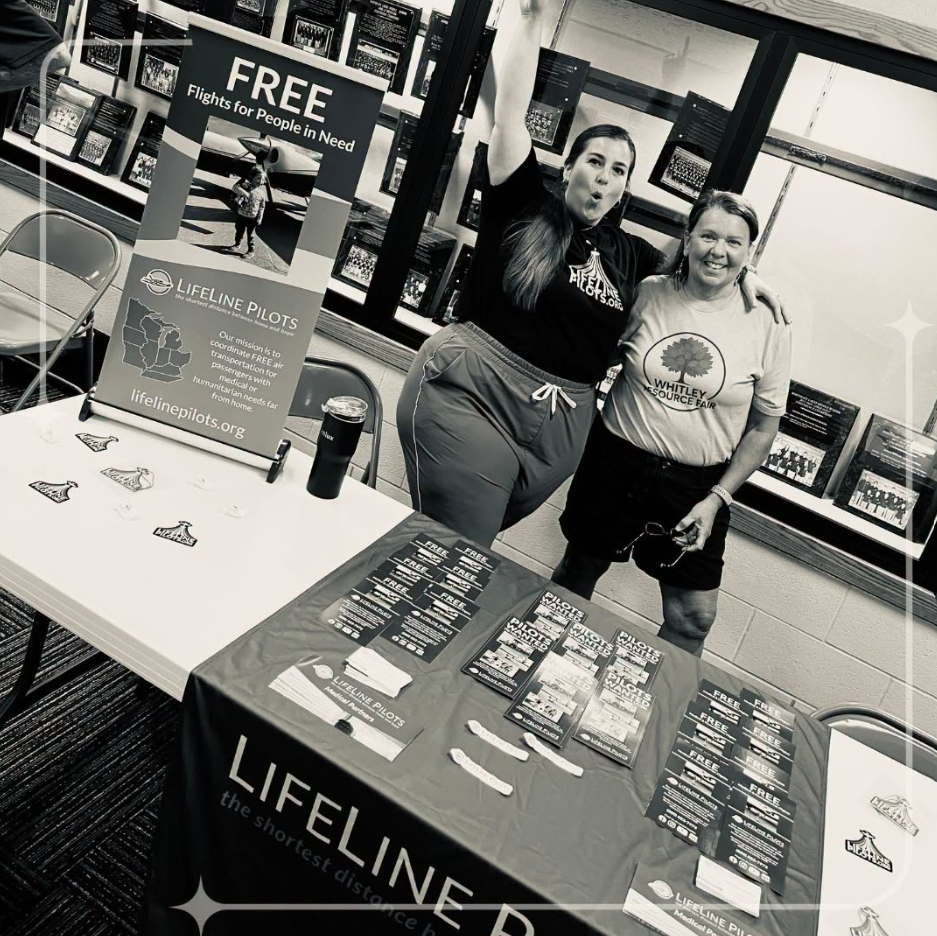
Black and white photograph of two women smiling behind a vendor table neatly laid out with a Lifeline banner and giveaway items

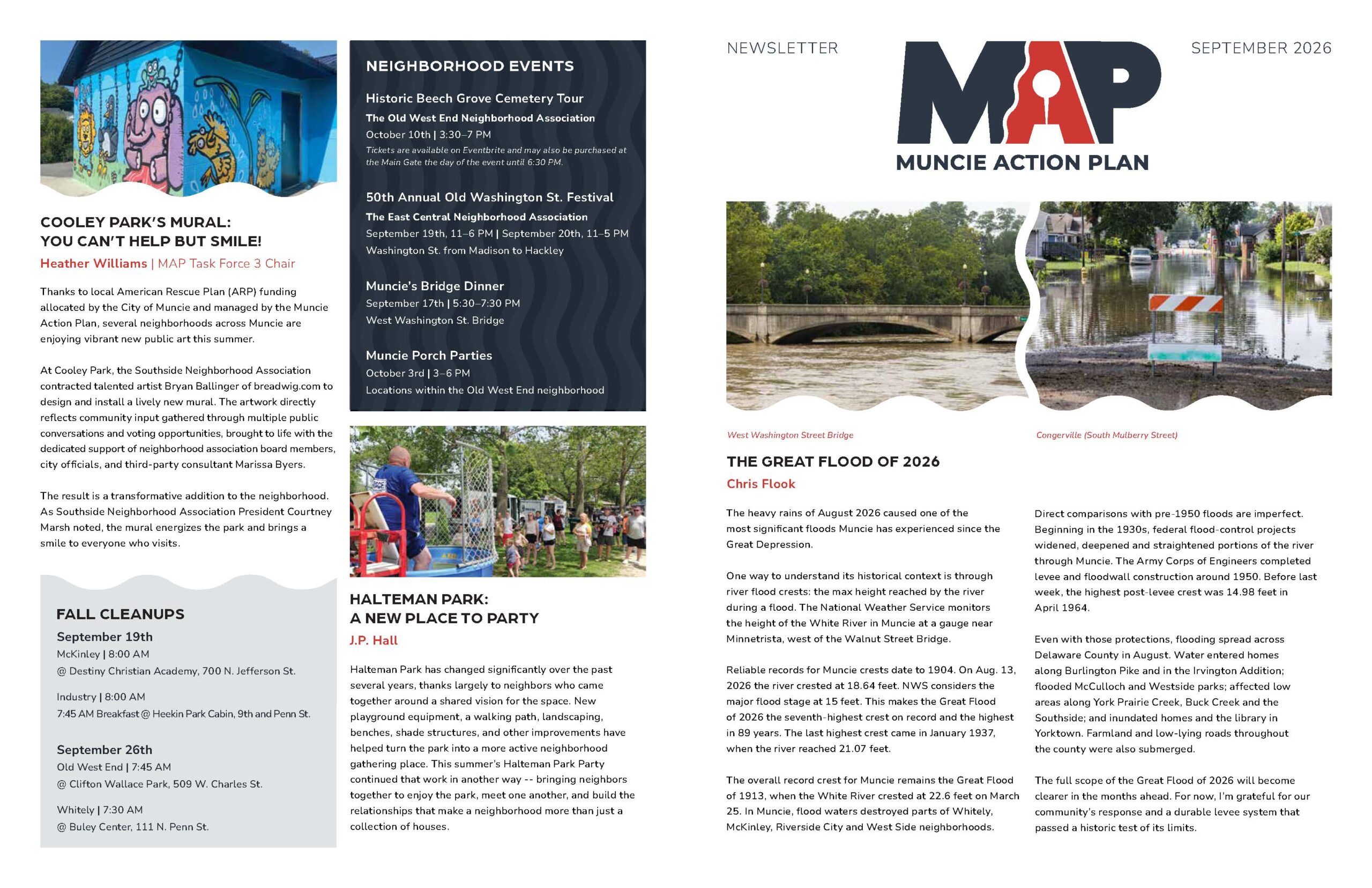
The 2025-2026 CenterPoint Scholars focused on Communication and Connection. They contracted with Kate Elliott, associate lecturer of journalism at Ball State, to conduct a series of $20 interviews called “Twenty Forward.” Each month, Kate puts $20 in the hands of two Muncie residents and then writes about who or what they support with their modest but meaningful investment in our city. Read the project introduction to learn more.


Finding Hope

How LifeLine Pilots Connect Families with Medical Care
By Kate H. Elliott

A black and white image of Lauren Prazeau against a white backdrop. She is smiling and wearing a denim jacket over a black shirt.

V1 Lauren Prazeau answered a call from a high school friend — expecting, perhaps, to reminisce about waiting tables at Cracker Barrel. 

Instead, her friend shared devastating news: Her baby boy had been diagnosed with a rare genetic disorder she could barely pronounce, and the closest specialist was more than 600 miles away in Philadelphia. 

With three other children, a home and a job to manage, her friend felt overwhelmed. She had few answers beyond the frightening ones online. She was spiraling. 

Lauren couldn’t offer medical advice or make the diagnosis disappear, but she could get the family on a plane to Philadelphia. 

Non-emergency medical flights for patients in more than 10 states 

Since January 2025, Lauren has worked part time as an Outreach Coordinator for LifeLine Pilots, a nonprofit that coordinates free non-emergency medical flights for patients across 10 Midwestern states. Lauren knew she could help connect her friend with a volunteer pilot.  

“Seeing my friend’s family go from hopelessness to having answers from an amazing specialist was so rewarding,” she said. “My friend sent me a picture from the plane of her baby sleeping soundly, wrapped in a blanket someone had crocheted for her. It was a light during a very dark time.” 

Founded in 1981, LifeLine Pilots has grown from a handful of volunteer aviators in Illinois to hundreds of pilots, who donate 100% of their time and flight expenses to help those in need.  

“Our pilots have flown more than 7.2 million miles, which is about 13,000 flights, to get people the medical care they deserve,” she said. “Each of those flights is a powerful story and means the world to the person or family onboard, but we give people privacy, so I don’t always know their story.” 

No cost. No limit. 

There is no catch, Lauren said. Patients or their loved ones can request a flight online or by phone, and the staff works to meet their needs. There is no limit to the number of times a passenger can fly, and there is never a cost.  

“We fly people to medical appointments, but we also fly loved ones to meet people at long-term facilities and so much more,” she said. “I always tell people to just call us, even if they are outside our service area or don’t think their need falls within our scope. We often find a way to help, even if we need to direct them to other resources, and being part of this organization has opened my eyes to all the people and organizations working together to help in times of crisis and need.” 

The letters LifeLine Pilots receive from passengers and volunteers keep this work personal, Lauren said. One letter, posted on the organization’s website, came from parents whose 6-year-old son was flown home.  

“Thank you for bringing our son, Josh, home. He passed away with us and all his brothers and sisters with him. I truly believe he knew he had to leave us but wanted us all to be with him. You made that possible. We are so grateful to you. I held my baby when he had to leave, and I am so grateful to you. We miss him very much but try to hold on to the belief he is in a much better place and has no more pain.” 

Pilots donate their time, 100% of flight costs  

Mike Samp, of Illinois, wrote that volunteering as a LifeLine Pilot has made him the “benefactor of so much in return.” He keeps in touch with some of the people he has flown, following their progress and offering well wishes. He has also formed friendships with other volunteer pilots who share his passion for helping others in the sky. 

Frank Ladonne, also of Illinois, wrote that he feels compelled to share his blessings and passion for flying with people who need help: “Most of the missions I have flown are for people with ongoing treatments, which have so consumed their resources that there is nothing left for transportation.”  

“Particularly heartrending are the little children whose families are beside themselves dealing with the challenges of life-threatening illness and often crushing financial and emotional burdens. During the flights, I’ve come to know these people and, of course, realize that the only thing separating us is circumstance.” 

Ladonne added that life is not about “stuff,” like having the best car, biggest house or fanciest clothes because you’ll never be satisfied; there is always a better car, a bigger house and fancier clothes.  

“What makes you successful is, at the end of the day, whether you’ve made someone else’s life a bit better,” Ladonne wrote. “That is why I fly for LifeLine Pilots.” 

You don’t have to fly to make a difference 

Lauren is not a pilot.  

She didn’t grow up dreaming about airplanes or a career in aviation: “I was going to travel the world, speaking and teaching French,” which she did for a time until she became disillusioned with the classroom and pivoted to customer service roles.  

She became a licensed dispatcher and now arranges charter flights for kings, bands and more from her home in Edgewood, Indiana. She also runs weekly trivia at a local brewpub. 

“I think it’s important to tell people I am not a pilot or live in the world of aviation all day, every day because LifeLine Pilots has volunteers that do all sorts of things,” she said.  

“Not a pilot? No problem, we will find a way for you to give your time or talents to help make these families’ lives easier.” 

Volunteering isn’t the only way to help, she added. Putting up a flyer in the breakroom, sharing a social media post, or telling family and friends about LifeLine Pilots helps spread the word about this free, accessible resource.  

That education and outreach is Lauren’s focus. She fills her calendar attending resource fairs and speaking at meetings to talk about LifeLine Pilots’ services, which includes humanitarian efforts as well as non-emergency medical flights.  

In 2005, LifeLine Pilots flew supplies to drop-off points near New Orleans after Hurricane Katrina. In 2011, pilots hauled supplies and volunteers to Joplin, Missouri, in the wake of a tornado. During the COVID-19 pandemic, Lifeline Pilots transported supplies to rural communities.  

“I have found purpose in this role, even though it is part time,” said Lauren, who grew up in Greenfield, Indiana. 

Through her work, she meets people willing to give their time, resources and expertise to assist strangers. She also learns about other organizations and services driven to support families facing difficult circumstances. 

“It’s such a joy to help patients and their families through LifeLine Pilots but to also connect them with other supports,” she said. 

“In a world that can seem so dark and sad, this work brings me hope. That is why I am giving my $20 to LifeLine Pilots. Even small investments make a big difference.”

Criteria for flights  

But as much as Lauren and LifeLine Pilots want to fulfill every request, the organization must follow specific requirements. For first-time flight requests, LifeLine Pilots needs at least four business days’ notice before the requested trip departure, which is often the day before a medical appointment. A completed physician release is required for each passenger before a flight. 

Passengers must be able to board the aircraft and sit during the flight. The planes are typically small, non-pressurized aircraft with four-to-six seats. Adult passengers may bring one companion, age 16 or older, while children may bring up to two companions. 

Passengers must arrange for transportation to and from the airport, but LifeLine Pilots’ website also offers links to resources like ground transportation, financial aid, social support services, and free or reduced-rate accommodations. 

“We can’t help everyone, but we try,” Lauren said. “I focus on those we can, like my friend, who sends me videos of her son, who is doing much better — crawling on the floor and playing with his older brothers. They have a lot ahead of them, but at least we can help them know how they will get there.” 

Go to lifelinepilots.org or call 1-800-822-7972 to learn, get involved or request a flight from LifeLine Pilots.  


Thank you to Muncie Action Plan and CenterPoint Scholars for supporting these small but meaningful investments in community. Go to Twenty Forward to read this and other stories about what your neighbors are doing with $20.
Twenty Forward > Chip Taylor

twenty forward header image

The 2025-2026 CenterPoint Scholars focused on Communication and Connection. They contracted with Kate Elliott, associate lecturer of journalism at Ball State, to conduct a series of $20 interviews called “Twenty Forward.” Each month, Kate puts $20 in the hands of two Muncie residents and then writes about who or what they support with their modest but meaningful investment in our city. Read the project introduction to learn more.


Level up your civic engagement

Muncie Waypoint Program turns civic engagement into a tangible, rewarding challenge
By Kate H. Elliott

  • Sign up for a city newsletter: 5 points.
  • Host a neighborhood gathering: 20 points.
  • Give a friend a ride to the polls on election day: 30 points.

Politics have long been compared to a game, and Charles “Chip” Taylor is inviting you to make the next move.

In February, the political science professor emeritus created the Muncie Waypoint Civic Engagement Program on Substack — an online publishing platform that allows users to post content and email subscribers.

“Local politics is where our individual voices matter most,” said Taylor, who taught at Ball State for 16 years after a career as an engineer in local government. “I figured that if I could energize my neighbors in a fun way, I could help strengthen the community and improve lives.”

Muncie Waypoint’s homepage features informative posts about how to volunteer with a political party, host a candidate meet-and-greet, and navigate political disagreements with loved ones. Its about page explains the Muncie Waypoint game — to turn civic engagement into a tangible, rewarding challenge.

From Base camp to the Summit

Here’s how it works: Subscribe to Muncie Waypoint for free, and you begin at “Base Camp.” From there, choose activities from three categories — learn, building community, and influence. Each activity is assigned points that you log to advance to the Trail Head, Outpost, Ridge and Summit levels.

“We hold a celebration for those who achieve Trail Head status,” Taylor said. “It’s a way for us to connect with each other in person and to honor engagement in important community decisions and civic action.”

Under the “learn” heading, you can pick up five points for following a local government or news outlet on social media, 10 points for attending a candidate forum, and 20 points for summarizing an issue discussed at a public meeting.

The “build community” category includes 20-point activities such as hosting a neighborhood game night or volunteering two hours for a local organization. “Influence” offers points for registering to vote, offering input at a public meeting, and contacting a representative to ask a question or raise a concern.

Each month, Taylor posts a list of upcoming civic meetings and events, to which he also assigns points. A monthly “Leaderboard” recognizes participants for their civic engagement and consistency. Taylor emails these and other posts to people who opt-in to his monthly e-newsletter.

“Improving the performance of the public sector, especially at the local level, is one of the most pressing issues facing the country today,” said Taylor, who also served as director of Ball State’s Bowen Center for Public Affairs from 2017-21. “A lot of information is shared on social media, and that is fine, but we need to push ourselves to get out into the community and meet with representatives and talk through issues in person.”

Turning neighbors into civic leaders

Muncie Waypoint is not Taylor’s only civic project since retiring in 2024. He helped create the CenterPoint Scholars program, which invites 10 Muncie residents each year to engage in leadership training focused on enhancing the quality of life in their neighborhoods.

Scholars commit to attending monthly meetings and a two-day retreat in April as they collaborate to address issues in Muncie’s neighborhoods. Upon successful completion of the program, Scholars receive $500 through support from CenterPoint Energy and the City of Muncie. Program partners are Muncie Action Plan, Shafer Leadership Academy, 8twelve Coalition, Habitat for Humanity, and Ball State’s Office of Community Engagement and Bowen Center for Public Affairs.

“It’s inspiring to see neighbors go through the program to learn about available resources and gain the skills and confidence to make real change where they live,” he said. “Maybe the best part about it is seeing them meet regularly to share ideas and network with other neighborhood leaders. They realize the power and possibilities in civic engagement.”

His $20 investment

When given $20 to spend in the community, Taylor gave it to an effort that emerged from the first CenterPoint Scholars cohort in 2024.

Several of the inaugural scholars founded the 5:50 Alliance to combat food insecurity. Among their efforts is a free food fridge at the Common Market on Eighth Street.

“The 5:50 Alliance aims to provide meat and other fresh proteins and produce to people in need, no questions asked,” Taylor said. “Giving them my $20 is an investment in their collaborative, grass-roots spirit of civics to address a problem, namely eliminating barriers to access. They listened to their community and dedicated themselves to coming up with a solution. Their work is making a difference, and that is what all these efforts I’m part of are trying to inspire.”

The alliance accepts donations and partners with Second Harvest Food Bank of East Central Indiana to keep the fridge stocked and offer non-perishable food items. To learn more, volunteer or donate, contact CenterPoint Scholar, Napolean Price, at napoleonprice7@gmail.com. Monetary donations can be made directly to curehunger.org; donors should mention the 5:50 Alliance at the Common Market.

Establishing ethics and showing up

Taylor also helped create and serves on the Muncie Ethics Commission, on which he continues to serve. The commission meets monthly to implement and uphold the city’s Code of Ethics.

Taylor’s expertise guided creation of the ethical standards expected of city officials and employees. The code addresses conflicts of interest, gifts, misuse of public office or confidential information, outside employment, nepotism, and other rules intended to ensure government decisions are made impartially and in the public interest.

In that spirit, Taylor goes to most Muncie City Council meetings. It’s important, he said, for elected officials and employees to see residents in the room and know that people care about and keep track of their decisions.

“We have become such a hyper individualistic society, but we need each other — in person, talking face-to-face,” he said. “You can’t replace that personal collaboration and debate, and we can’t read about city meetings in the newspaper anymore, so I go and see a bunch of the other engaged citizens who also go, and I love having those micro interactions with neighbors.”

He is building a database of Muncie City Council members’ votes and meeting attendance. The goal, he said, is to give residents another way to understand how their elected officials participate in local government and to make public decision-making easier to follow. The council vote records will inform an upcoming post at Muncie Policy Memo, his recently launched Substack newsletter.

“Voting and registering to vote is important, but there is a lot of politics and that happens outside of and in between elections. For instance, the County Commissioners held a hearing about a potential new property tax, and a bunch of their constituents showed up to express concern, so the commissioners voted it down,” he recalled. “Now, it doesn’t always go your way, but who knows if you don’t show up and use your voice.”

Muncie Waypoint and other online resources and forums can help residents stay informed, Taylor said, but they cannot replace face-to-face connections. “I appreciate that people share their views online, but social media posts aren’t really going to change much,” he said. “Eventually, you need to get out and talk to others and your elected officials. Most people and public servants are receptive, I promise.”

Always a teacher

Why doesn’t Taylor run for office?

“Not everyone can or should be President of the United States. There are lots of roles and paths to serving your community. I ran for office in Missouri decades ago, and I realized it wasn’t for me. Teaching and creating programs is my lane, and I encourage everyone to find their way to invest and connect.”

Taylor doesn’t talk much about his publications or awards. He talks about the former students and Muncie neighbors he has seen grow through civic engagement and dedicate themselves to improving communities.

“Throughout my career and now in retirement, my focus has remained on preparing others for public service that suits them,” he said. “I taught my students that political science isn’t just a bunch of theories; it’s about applying those concepts to making the world a better place in your own way.

“And through programs, I encourage and empower neighbors to maybe take that first step into civic engagement, and then they see how a little becomes a lot. And if they don’t aspire to anything grander than improving their neighborhood, that is just fine. Imagine if everyone set out to make positive change in small ways like planting a lovely garden, creating and sharing a voter guide, or putting up a Free Little Library. Those matter.”

Taylor said he hopes others join the charge to change Muncie’s narrative. “This town has a lot of authenticity and heart, and there are a lot of people and organizations out there who need your help,” he added.

To learn more about Muncie Waypoint, go to munciewaypoint.substack.com. Signing up is free and easy.


Thank you to Muncie Action Plan and CenterPoint Scholars for supporting these small but meaningful investments in community. Go to Twenty Forward to read this and other stories about what your neighbors are doing with $20.
Twenty Forward > Cathy Lee

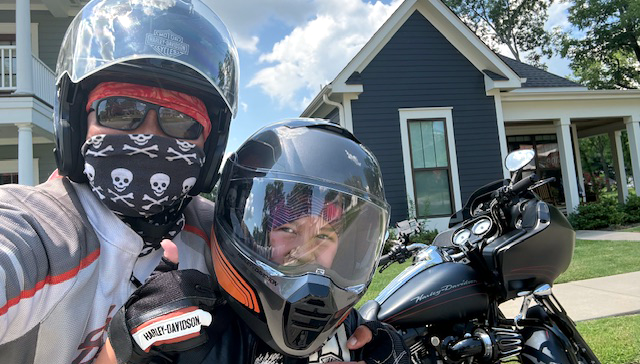
A woman and a child taking a selfie on a motorcycle in front of some houses. Both are smiling and wearing helmets.

The 2025-2026 CenterPoint Scholars focused on Communication and Connection. They contracted with Kate Elliott, associate lecturer of journalism at Ball State, to conduct a series of $20 interviews called “Twenty Forward.” Each month, Kate puts $20 in the hands of two Muncie residents and then writes about who or what they support with their modest but meaningful investment in our city. Read the project introduction to learn more.


After tragedy, she chose a life without limits

By Kate H. Elliott

A smiling woman and child taking a selfie against a beautiful beach backdrop

Her younger brother played on the deck while 10-year-old Cathy Lee Arcuino splashed in their backyard pool. “Watch your brother,” her mom said, and she did — until she pulled his limp, 2-year-old body from beneath the surface.

For the next 16 years, Cathy Lee helped her parents clean Rey John’s trach, flush his G-tube and more for eight hours a day before handing off his care to a privately paid nurse for the remaining 16.

“I knew he would never wake up, but I think my mother always held out hope,” Cathy Lee said. “I will never know, though. My parents immigrated to the United States from the Philippines, and in our culture, you don’t talk about it. It was all around us, but we never talked about it.”

When she graduated high school, Cathy Lee desperately wanted to leave Fresno (California). She felt trapped — every day at home was a reminder that Rey John drowned on her watch. She did move a few hours away for college but drove six hours every weekend to return to Rey John. One day, she sat beside him and made a pact: “’Please let me go into the Peace Corps,’ I asked him. ‘Then I will come back and fulfil my duty to watch you.’ I don’t know that he heard me, but I felt a peace about going, so I did.”

Cathy Lee boarded a plane for Kazakhstan to live in a remote village, where she “pooped in a hole and wiped my ass with the pages of a Russian book that you’d throw into a basket to burn later for heat.”

A year and a half into her service, Cathy Lee learned that Rey John died.

“It rocked my world,” she said. “But I began to wonder if it was almost a gift to me because he knew I wanted to get out and live — for me and for him. I made a pledge to never live in a coma, to walk around mindlessly like so many people do. I wanted to do something with my life, so I live big and in my own way, bringing Rey John with me everywhere I go. He’s my guardian angel.”

Since then, Cathy Lee has traveled to more than 50 countries, worked for a nonprofit in Kyrgyzstan and taught English in Poland, Thailand and Japan. She rides her Harley across the country, wears clothes with skulls, jewels or both, and collects tattoos that tell the story of her life.

By 35, Cathy Lee had earned a Ph.D. in educational leadership. The following year, she decided she wanted to have a daughter: “I didn’t want a relationship, so I asked my gay best friend, David, to donate his sperm.” A year later, Mirasol, was born.

“Her name means ‘Sun-watcher and sunflower,’ and my nickname for David was ‘Sunflower’ since we met in the Sunflower State (Kansas),” Cathy Lee said. “Mirasol is bright like a sunflower, so her name fits her.”

Mirasol makes her mother proud: “She’s 10 and rocks a pixie cut, has traveled with me to 23 countries, and, in January, won the Martin Luther King Jr. Award for exemplifying the qualities of MLK Jr.”

The two have moved to four states as Cathy Lee has built a career in international education, eventually landing at Ball State University as executive director of Graduate & International Admissions and Services.

“I oversee Ball State’s graduate and international admissions and supports international students before, during and after enrollment,” she explained. “I love and live for working with students — both helping international students adjust to life and learning in the United States and helping American students explore overseas.”

Cathy Lee will invest her $20 in Ball State’s Rinker Center for Global Affairs to support students studying abroad. Pushing out of one’s comfort zone is Cathy Lee’s greatest advice to students: “It might be community service in your town, a mission trip to a Native American reservation or a study abroad experience. These all provide you with opportunities to get outside yourself, which enriches your life in unimaginable ways.”

The more different the experience is from your life, the better, she said. “Go to a country that speaks another language or go poop in that hole,” she said. “Those experiences test you, stretch you and often make you more grateful and resilient and interesting.”

Then, she tells students to make a difference — not necessarily in a big way but in some way. “Sometimes the small things are the big things,” she said, “Don’t minimize showing up for people or helping neighbors and loved ones. We can all do good and be good.”

And when others aren’t good to you, lead with questions, she advises, after a lifetime of people assuming she can’t speak English or is not from America. At a Kansas grocery store, a woman asked her, ‘Where is the rice you all cook in China, and how do you cook it?”

“I have learned to respond with questions or a story so people can better understand my experience or stance,” she said. “I’ve found that approach leads to more empathy and understanding.”

Cathy Lee gathers stories through travel and connections with others. “This is why I love my job,” she said. “Every day, I get to talk with students, hear their stories, and empower them and provide support. I get to watch them dream and go and grow.

Those meaningful connections are Cathy Lee’s way of “doing good” in the world. “I wasn’t able to make a connection with my brother, so I make connections with others and the world. That passion for life and people helps me make meaning of tragedy.”


Thank you to Muncie Action Plan and CenterPoint Scholars for supporting these small but meaningful investments in community. Go to Twenty Forward to read this and other stories about what your neighbors are doing with $20.
Twenty Forward > Tracina Greenleaf

twenty forward header image

The 2025-2026 CenterPoint Scholars focused on Communication and Connection. They contracted with Kate Elliott, associate lecturer of journalism at Ball State, to conduct a series of $20 interviews called “Twenty Forward.” Each month, Kate puts $20 in the hands of two Muncie residents and then writes about who or what they support with their modest but meaningful investment in our city. Read the project introduction to learn more.


‘They never had the boots’: Trae Greenleaf champions dignity, housing and hope for Central Indiana families

By Kate H. Elliott

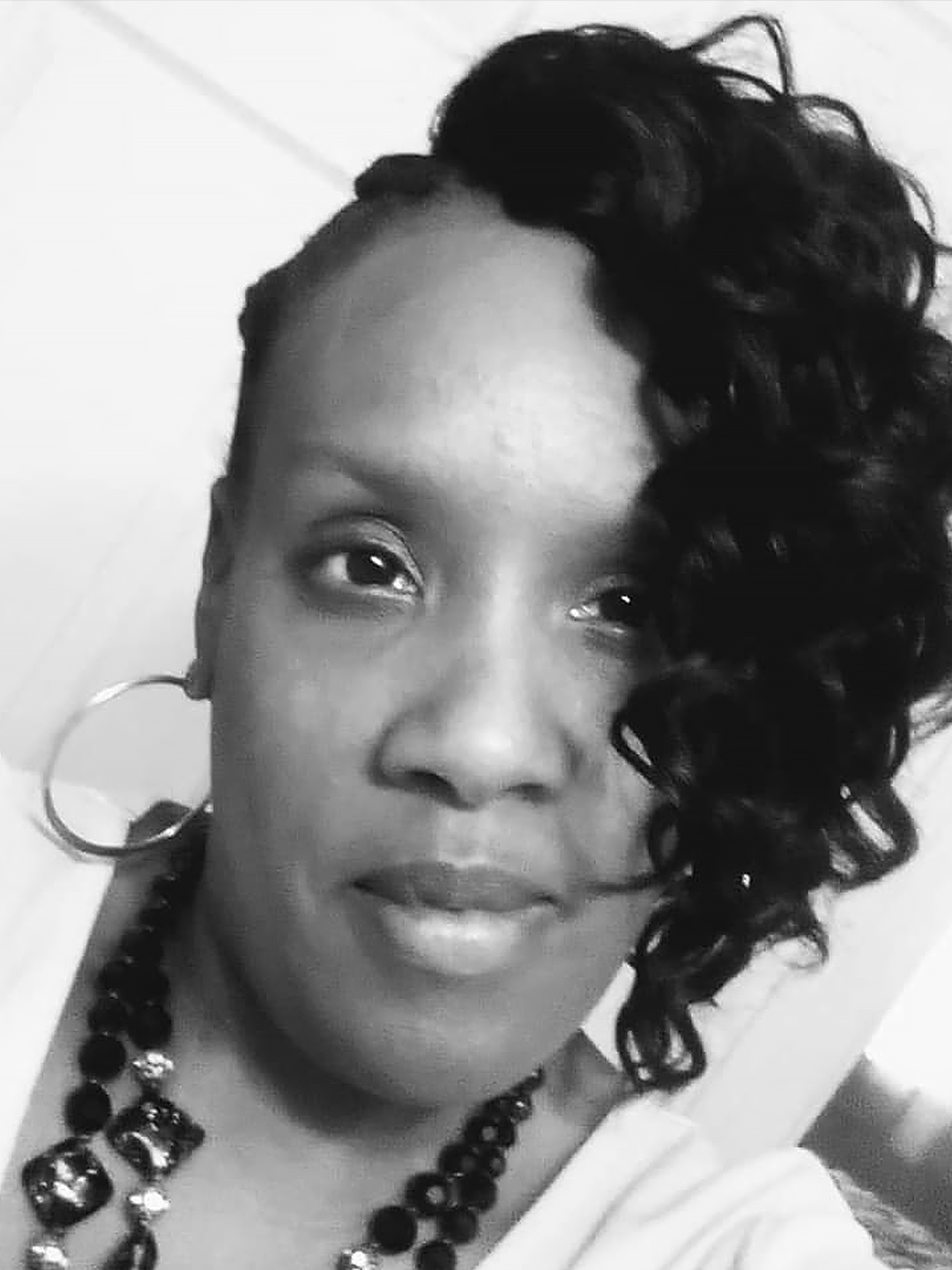
A black and white headshot of Trae Greenleaf, a black woman with a slight smile in a white blouse complimented by black jewelry.

Tracina Greenleaf introduces herself like this:

“My name is Tracina, but people call me ‘Trae,’ which stands for Transition, Reform, Advocate and Educate. That’s my name, and it’s what I stand for.”

As operations manager for the YWCA Central Indiana, Trae spoke with Ball State students about the organization’s work to eliminate racism, empower women, promote social justice and help families in the seven counties it serves.
“Our residents are your friends, your grandmother. They are me and you, and they — like all of us — deserve respect and dignity,” she said.

Trae gave an example. She often does — because in her line of work, examples remind people of their shared humanity. She’s not talking about abstract concepts like “poverty,” “assault” or “hunger.” She is talking about people.

“We recently had some high school students stay with us — a set of twins at Muncie Central and a young woman at Delta. You would have never known they were unhoused,” she said. “They were popular, engaging — the whole nine yards. We helped them go to prom and had graduation parties for them here at the YWCA. We told them, ‘You don’t need to tell people you are staying upstairs, just that you rented a room here for the party.’”

Trae got teary, and so did the students.

“One of those kids is now in nursing school and working for a congress person,” she added. “She’s doing really well — one of our success stories.”

More than 40% of those served at the YWCA Central Indiana are between the ages of 0 and 17, according to the organization.

Trae and her staff do “anything and everything” for more success stories among the roughly 600 people they serve each year. The YWCA partners with Ball State, Ivy Tech, Meridian Health Services and more to provide mental and social support to those in need. They provide education about financial literacy, housing, healthcare and professional development. They also meet basic needs for clothing, food and daily essentials.

“We are the only residential stay program for women in seven counties, and we are the state’s only YWCA that accepts mothers with sons over age 10 into its emergency shelter and temporary stay programs,” she said. “We are committed to keeping families together.”
Trae and Executive Director, WaTasha Barnes Griffin, fill their calendars speaking to clubs, churches and schools to advocate for the organization’s mission and to spread awareness about needs in the region. They join their staff at informational tables and benefit walks. They stock shelves, help women budget, and read bedtime stories to the YWCA’s youngest residents.

“We will stop when the work is done,” Trae said, “and the work will never be ‘done.’”
Learn more about the YWCA Central Indiana at ywcacentralindiana.org. The site includes a donation list, information about upcoming events and ways to get involved.
Not everyone has the same opportunities or access, she told the students. “So, when people say or think our residents should just ‘pull themselves up by their bootstraps,’ I say, ‘They never had the boots, let alone the straps.’”

Trae cares about all the nonprofit’s priorities, but she is especially focused on affordable housing. For every 100 extremely low-income renters in Indiana, only 38 affordable and available housing options exist, according to Prosperity Indiana and the National Low Income Housing Coalition. Nationally, more than a third of extremely low-income renters work, another third are seniors, and many have a disability or are students and caregivers.

“People who struggle to pay rent also tend to have trouble paying for other basic necessities — often sacrificing things like food, healthcare or childcare to have place to live,” Trae said. “And then, a car accident or unexpected medical bill prevents them from going to work, and then they are out on the street or bouncing from couch to couch. A warm home is the foundation for a stable life.”

A student raised her hand: “What can we do?”

Trae didn’t hesitate: “Vote.”

“I won’t tell you who or what to vote for, but I will tell you to vote based on the interests of your family and your community,” she added. “Yes, of course, you can volunteer and donate and spread awareness, but you — we all — have the greatest impact with our vote to set the priorities for our government.”

Trae is giving her $20 donation to support the YWCA, but what can $20?

“More than you think,” Trae said. “Every donation — just like every bottle of shampoo — helps. Everyone can make a difference in their own way. Too many people don’t give of their time, talents or money because they don’t think it’s enough. It is.”

Learn more about the YWCA Central Indiana at ywcacentralindiana.org or check them out on Facebook and Instagram.

Thank you to Muncie Action Plan and CenterPoint Scholars for supporting these small but meaningful investments in community. Go to Twenty Forward to read this and other stories about what your neighbors are doing with $20.
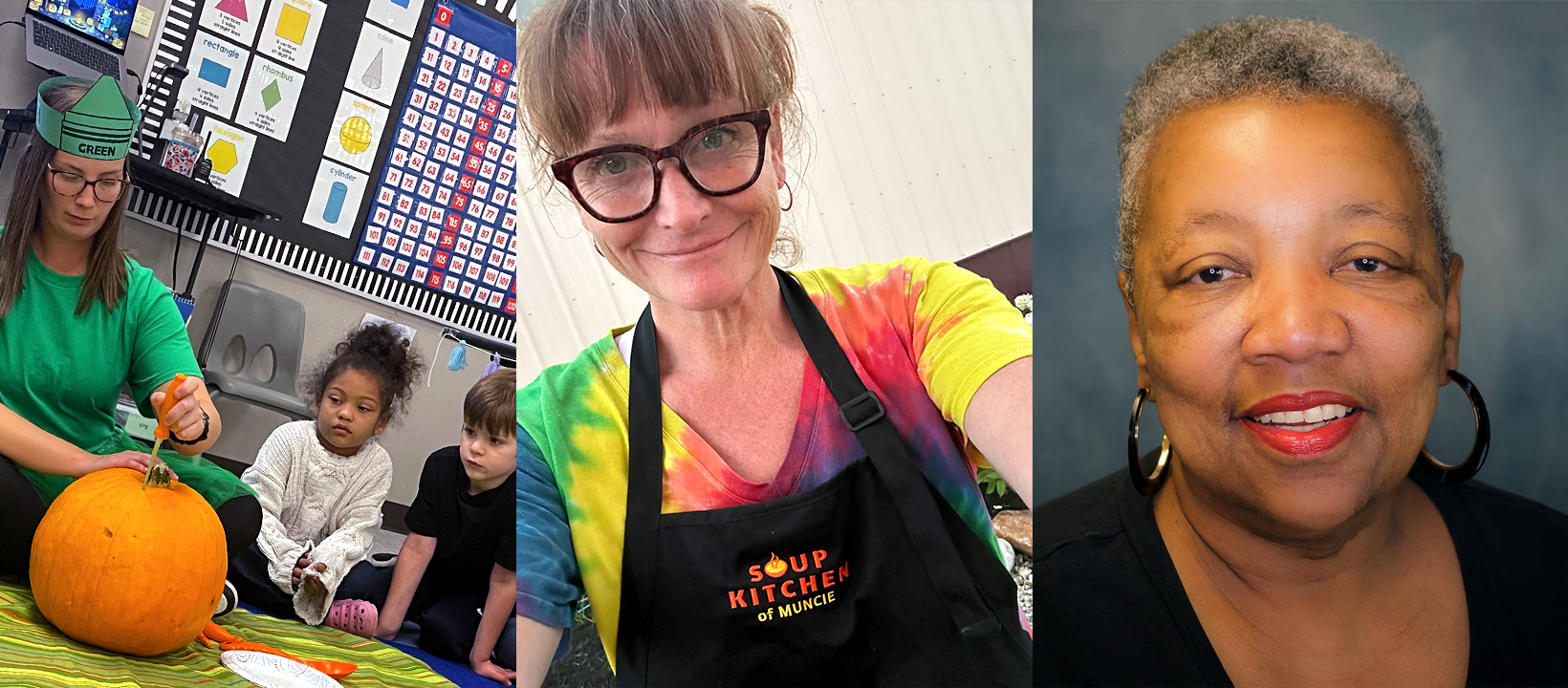
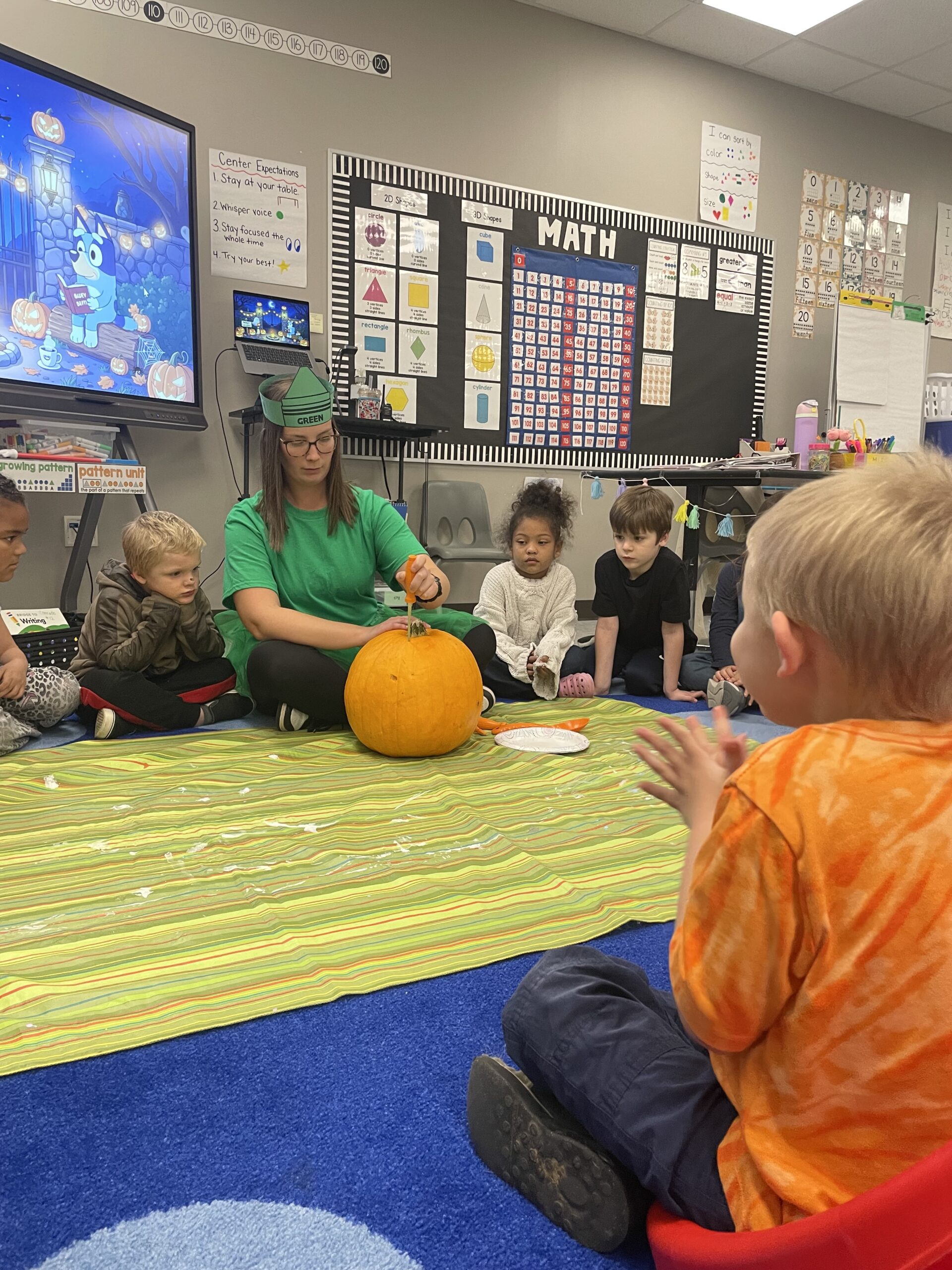
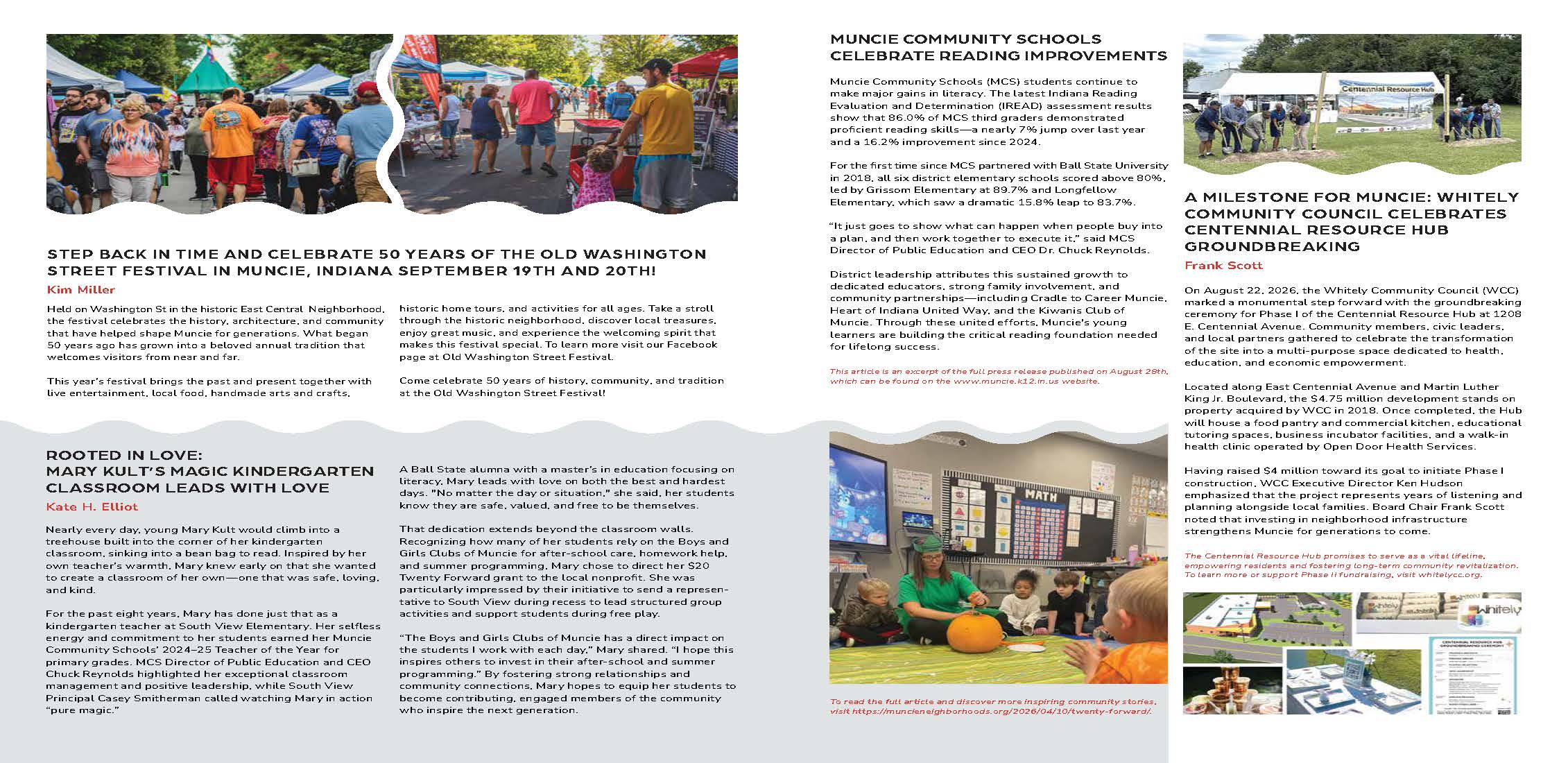
Mary Kult sits on a colorful floor surrounded by attentive children who watch her carve a pumpkin

Mary Kult

Rooted in love

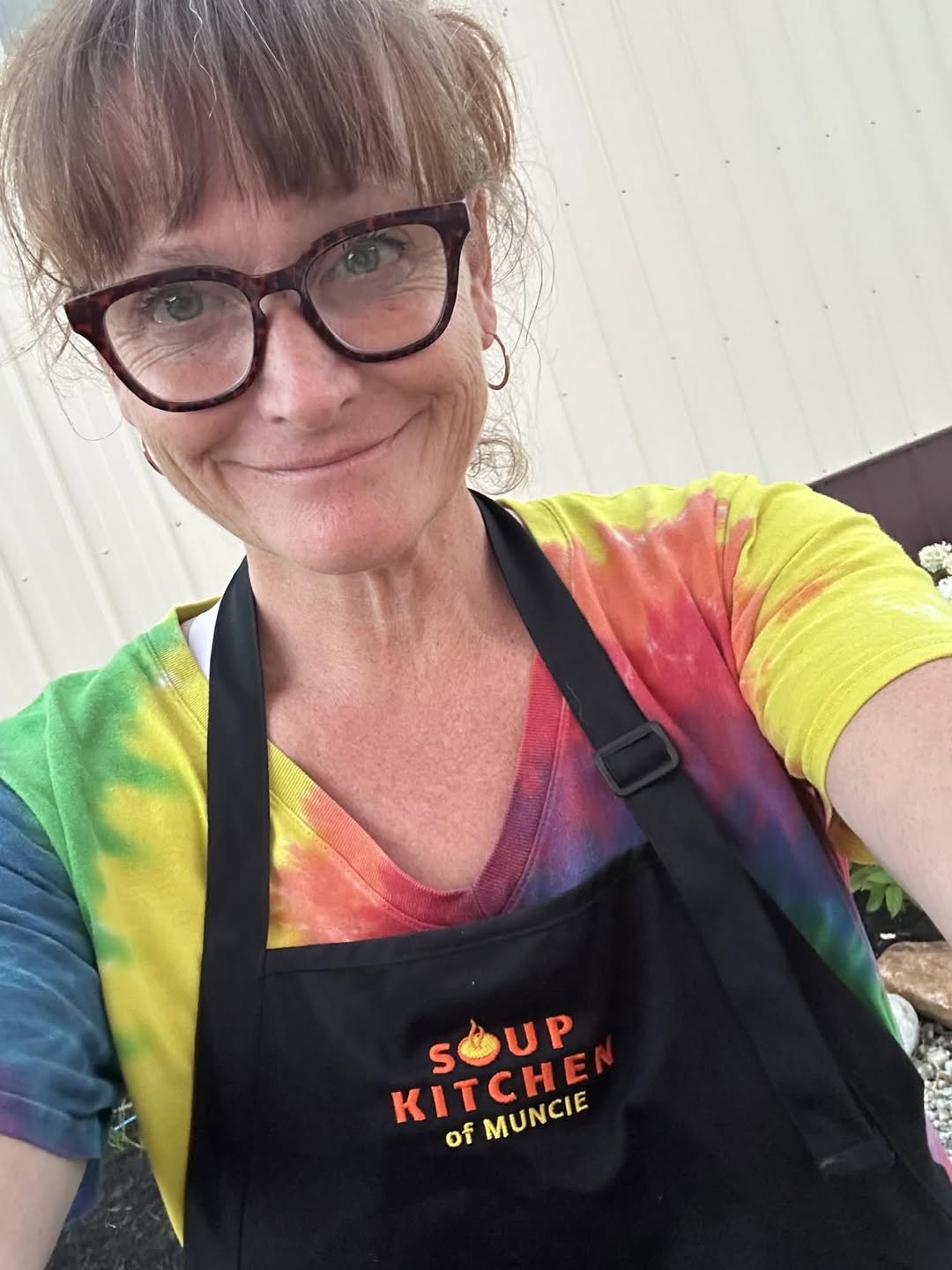
Christiana Mann selfie - she is wearing a rainbow tie dye shirt under a black apron with a "Soup Kitchen of Muncie" logo on it.

Christiana Mann

Hospitality with heart

CenterPoint Scholars initiates printed neighborhood newsletters

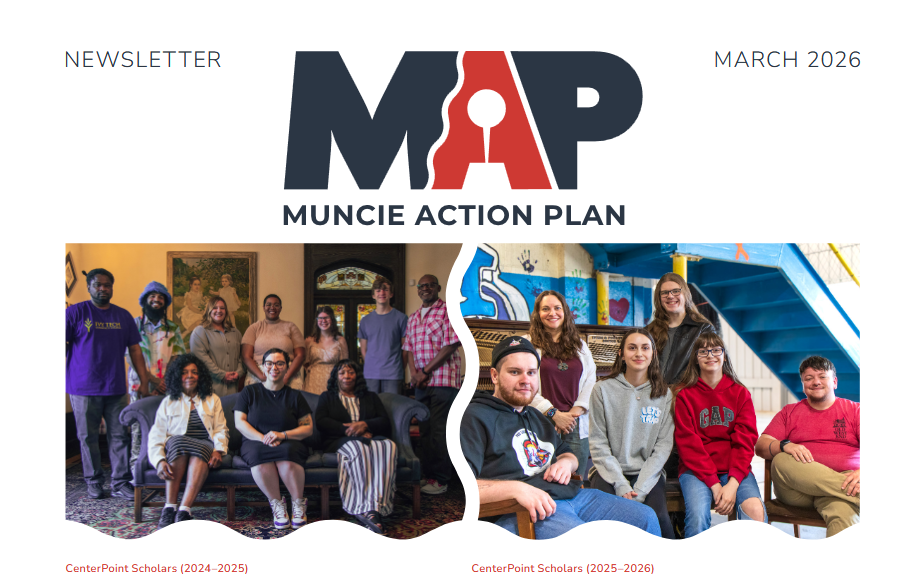
Screenshot of the header of the March 2026 CenterPoint Scholars MAP newsletter. The date is at the top along with the MAP logo and the CenterPoint Scholars class of 24-25 is on the left beneath it, with the class of 25-26 on the right.

Our CenterPoint Scholars (2025-2026) launched printed neighborhood newsletters at the IDEA Conference in March of 2026. These newsletters will be released every few months and are being designed by the excellent students of Ball State University’s Studio 165+. Check back often for new issues.

Read the latest newsletter:

DOWNLOAD (pdf)


Read this year’s newsletters:

MARCH 2026 | Download (pdf): containing articles on the CenterPoint Scholars, Laundry Love, the 5:50 Alliance Food Fridge, Twenty Forward, and the Helping House as well as information about Neighborhood Spring events and Muncie Waypoint.
JUNE 2026 | Download (pdf) – containing articles about the 2026 IDEA Conference, South Central, Porthlight Radio, Porch Parties, and more.

Porchlight Radio – new radio show launched by CenterPoint Scholars

Our CenterPoint Scholars (2025-2026) just launched their Porchlight Radio show on WMUN. Episodes are available on WMUN’s Facebook page. Check back often for new episodes.

Listen to the latest episode:


List of Porchlight Radio Episodes

EPISODE 1 (4/6/2026): Porchlight Radio hosts Sam and Jasmine speak with guest Denise King to talk about community, connection, and her experiences on the Old West End. LINK

EPISODE 2 (5/3/2026): Porchlight Radio hosts Sam and Jasmine speak with guest, Comedian, Actor, and Musician Tommy Davidson about his upcoming Muncie show, his past, and how it made him who he is today. SEGMENT 1 | SEGMENT 2

EPISODE 3 (5/10/26): Porchlight Radio hosts Sam and Jasmine speak with Brittany Scott, Founder of GROW WIWO and owner of Mom Gets Moxie about her experiences, Mom Gets Moxie, and the upcoming GROW Fashion Show. & Porchlight Radio hosts Sam and Jasmine speak with Dafina Kirk, a mother, community leader entrepreneur, advocate, and Founder of Adeedee Solutions about her early years in Muncie, Adeedee Solutions, and her upcoming opener for Tommy Davidson’s Mother’s Day Comedy Show. Brittany Scott | Dafina Kirk

EPISODE 4 (5/17/26): Porchlight Radio hosts Sam and Jasmine continue to speak with Executive Director of the 8twelve Coalition Pat Smith about life and the upcoming events with the 8twelve Coalition. SEGMENT 1 | SEGMENT 2

EPISODE 5 (5/25/26): Porchlight Radio Host Jasmine speaks with Ball State University’s Office of Community Engagement’s Communications Manager Michelle Kinsey about Ball State’s upcoming We Fly Fest on Saturday, June 6th. What it is about and what to expect. SEGMENT 1 | SEGMENT 2

EPISODE 6 (5/31/26): Porchlight Radio Hosts Sam and Jasmine speak with Neil Kring. Pastor with the Muncie Folk Collective about the struggle many in Muncie face but is often not seen. & Porchlight Radio Hosts Sam and Jasmine speak with Haile Long. A member of the Muncie Folk Collective as he talks about his lived experiences prior to meeting Neil and joining the Muncie Folk Collective. | Neil Kring & Halie Long