The 2025-2026 CenterPoint Scholars focused on Communication and Connection. They contracted with Kate Elliott, associate lecturer of journalism at Ball State, to conduct a series of $20 interviews called “Twenty Forward.” Each month, Kate puts $20 in the hands of two Muncie residents and then writes about who or what they support with their modest but meaningful investment in our city. Read the project introduction to learn more.
‘They never had the boots’: Trae Greenleaf champions dignity, housing and hope for Central Indiana families
By Kate H. Elliott

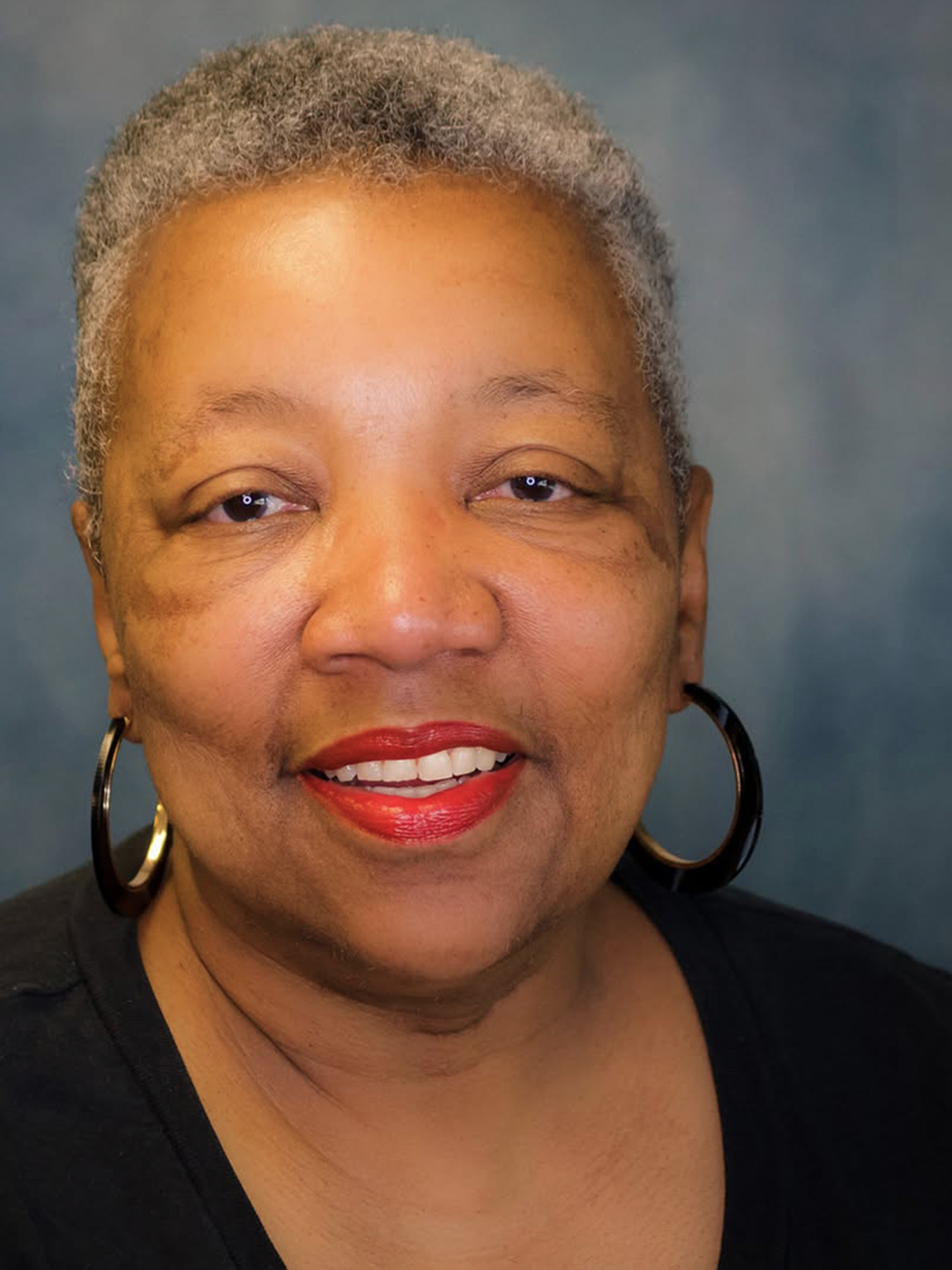
Tracina Greenleaf introduces herself like this:
“My name is Tracina, but people call me ‘Trae,’ which stands for Transition, Reform, Advocate and Educate. That’s my name, and it’s what I stand for.”
As operations manager for the YWCA Central Indiana, Trae spoke with Ball State students about the organization’s work to eliminate racism, empower women, promote social justice and help families in the seven counties it serves.
“Our residents are your friends, your grandmother. They are me and you, and they — like all of us — deserve respect and dignity,” she said.
Trae gave an example. She often does — because in her line of work, examples remind people of their shared humanity. She’s not talking about abstract concepts like “poverty,” “assault” or “hunger.” She is talking about people.
“We recently had some high school students stay with us — a set of twins at Muncie Central and a young woman at Delta. You would have never known they were unhoused,” she said. “They were popular, engaging — the whole nine yards. We helped them go to prom and had graduation parties for them here at the YWCA. We told them, ‘You don’t need to tell people you are staying upstairs, just that you rented a room here for the party.’”
Trae got teary, and so did the students.
“One of those kids is now in nursing school and working for a congress person,” she added. “She’s doing really well — one of our success stories.”
More than 40% of those served at the YWCA Central Indiana are between the ages of 0 and 17, according to the organization.
Trae and her staff do “anything and everything” for more success stories among the roughly 600 people they serve each year. The YWCA partners with Ball State, Ivy Tech, Meridian Health Services and more to provide mental and social support to those in need. They provide education about financial literacy, housing, healthcare and professional development. They also meet basic needs for clothing, food and daily essentials.
“We are the only residential stay program for women in seven counties, and we are the state’s only YWCA that accepts mothers with sons over age 10 into its emergency shelter and temporary stay programs,” she said. “We are committed to keeping families together.”
Trae and Executive Director, WaTasha Barnes Griffin, fill their calendars speaking to clubs, churches and schools to advocate for the organization’s mission and to spread awareness about needs in the region. They join their staff at informational tables and benefit walks. They stock shelves, help women budget, and read bedtime stories to the YWCA’s youngest residents.
“We will stop when the work is done,” Trae said, “and the work will never be ‘done.’”
Learn more about the YWCA Central Indiana at ywcacentralindiana.org. The site includes a donation list, information about upcoming events and ways to get involved.
Not everyone has the same opportunities or access, she told the students. “So, when people say or think our residents should just ‘pull themselves up by their bootstraps,’ I say, ‘They never had the boots, let alone the straps.’”
Trae cares about all the nonprofit’s priorities, but she is especially focused on affordable housing. For every 100 extremely low-income renters in Indiana, only 38 affordable and available housing options exist, according to Prosperity Indiana and the National Low Income Housing Coalition. Nationally, more than a third of extremely low-income renters work, another third are seniors, and many have a disability or are students and caregivers.
“People who struggle to pay rent also tend to have trouble paying for other basic necessities — often sacrificing things like food, healthcare or childcare to have place to live,” Trae said. “And then, a car accident or unexpected medical bill prevents them from going to work, and then they are out on the street or bouncing from couch to couch. A warm home is the foundation for a stable life.”
A student raised her hand: “What can we do?”
Trae didn’t hesitate: “Vote.”
“I won’t tell you who or what to vote for, but I will tell you to vote based on the interests of your family and your community,” she added. “Yes, of course, you can volunteer and donate and spread awareness, but you — we all — have the greatest impact with our vote to set the priorities for our government.”
Trae is giving her $20 donation to support the YWCA, but what can $20?
“More than you think,” Trae said. “Every donation — just like every bottle of shampoo — helps. Everyone can make a difference in their own way. Too many people don’t give of their time, talents or money because they don’t think it’s enough. It is.”
Learn more about the YWCA Central Indiana at ywcacentralindiana.org or check them out on Facebook and Instagram.
Thank you to Muncie Action Plan and CenterPoint Scholars for supporting these small but meaningful investments in community. Go to Twenty Forward to read this and other stories about what your neighbors are doing with $20.