
Article by Alexis Dishman | CenterPoint Scholars 2024-2025 cohort
When I was selected to be part of the inaugural CenterPoint Scholars 2024-2025 cohort, I knew the experience would be one of learning, growth, and collaboration. What I didn’t anticipate was how deeply meaningful the journey would become or that it would lead to the creation of a project rooted so strongly in empathy, dignity, and community connection.
As part of the program, we were tasked with forming small groups to identify and address a pressing need within our community. While there were many important issues to consider, our group quickly found common ground around one that felt both urgent and deeply personal: food insecurity.
Our conversations revealed that food insecurity looks different for everyone. For some, it meant growing up in a household where food was often scarce. Others shared experiences of needing just one or two ingredients to complete a meal. Some group members had never personally faced food insecurity but were eager to learn and understand its broader impact. Through open and honest dialogue, we began to recognize not only the lack of food itself, but also the stigma that too often accompanies asking for help.
From these discussions, The Helping House was born.
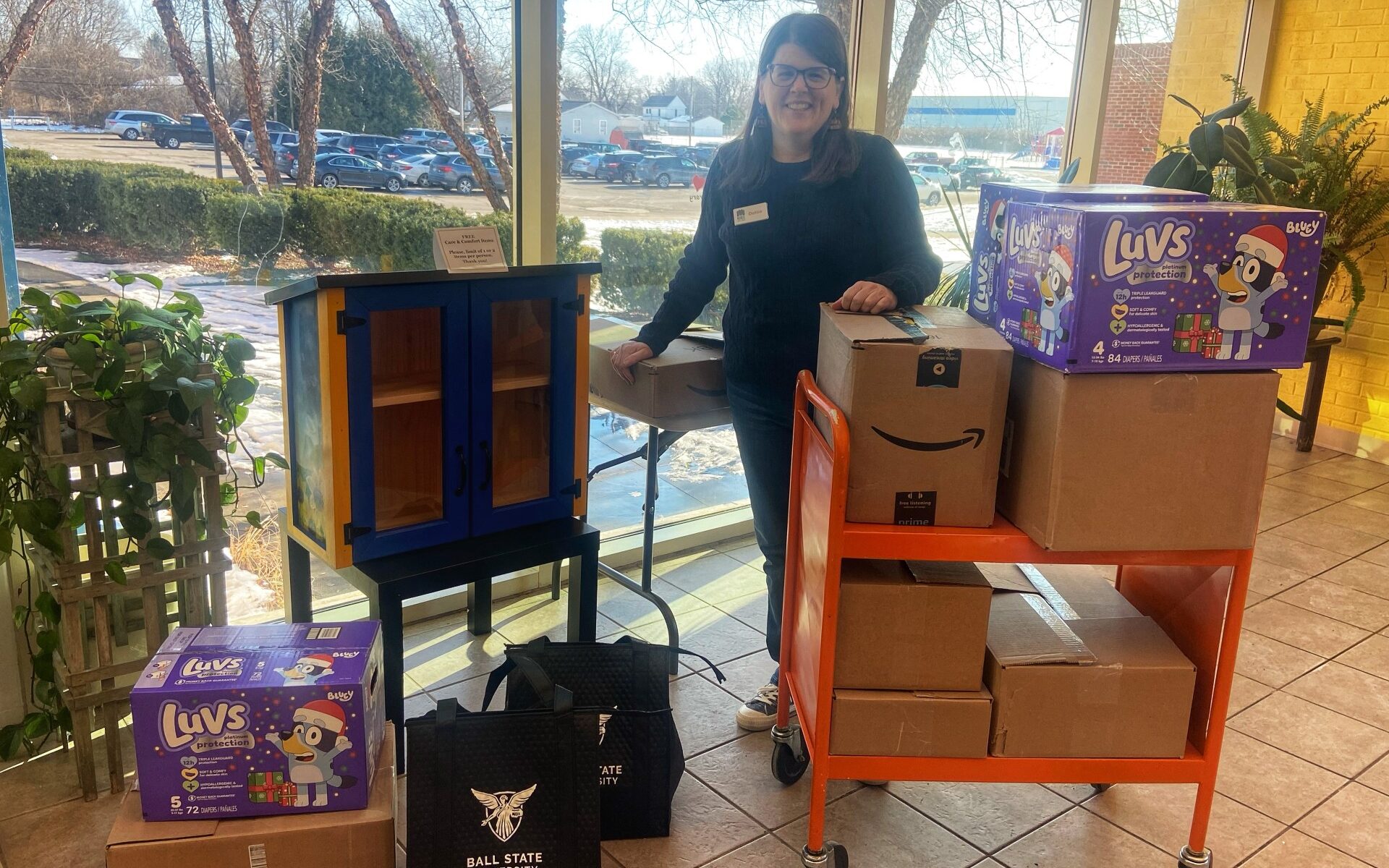
The Helping House is designed to address food insecurity in a way that is welcoming, accessible, and free of judgment. It offers a standalone structure where individuals can access non-perishable food items and hygiene products through a simple, respectful process that honors personal dignity and autonomy.
Each Helping House structure is painted with unique, vibrant scenes meant to spark curiosity, warmth, and engagement. These designs help shift the experience from one of need to one of connection, making the act of taking or exchanging food and hygiene items feel uplifting, human, and community-centered rather than transactional or stigmatizing.
Every detail of The Helping House was created with intention – including our logo. The calming blue color represents peace and stability, while the dove symbolizes hope, love, and new beginnings. What began as a group assignment quickly became a shared passion. Our planning meetings evolved into safe spaces for laughter, conversation, and genuine connection. The Helping House became more than a project, it became a reflection of the community we hoped to build.
The inspiration behind The Helping House comes from the concept of a Little Free Library – small neighborhood book exchanges where people are encouraged to take what they need and leave what they can. We embraced this honor-system model and reimagined it with non-perishable food and essential items, creating a space that is available, accessible, and rooted in trust.
Today, we are proud to have one Helping House structure in place at the Muncie Public Library / Maring-Hunt Library, with plans underway to establish a second location. Each new structure represents another opportunity to reduce barriers, meet needs, and strengthen community bonds.
Looking ahead, we are fully committed to keeping our Helping House structures stocked, maintained, and accessible for the long term. Our hope is to continue raising awareness about these resources while expanding their presence throughout the community. By installing additional structures and increasing visibility, we aim to ensure that more individuals know support is available quietly, consistently, and without judgment. The Helping House stands as a reminder that addressing food insecurity isn’t just about providing food, it’s about offering compassion, restoring dignity, and creating spaces where people feel supported and seen.
Our Helping House is now open at Muncie Public Library – Maring-Hunt Branch (2005 S. High St., Muncie, IN 47302). Community members are encouraged to donate items or take what they need. Learn more and follow our journey by visiting our Facebook Page – www.facebook.com/TheHelpingHouseMuncie
CenterPoint Scholars is a program of the Muncie Action Plan, funded through generous support from the CenterPoint Energy Foundation and the City of Muncie.


