The Helping House: Building Community Through Compassion

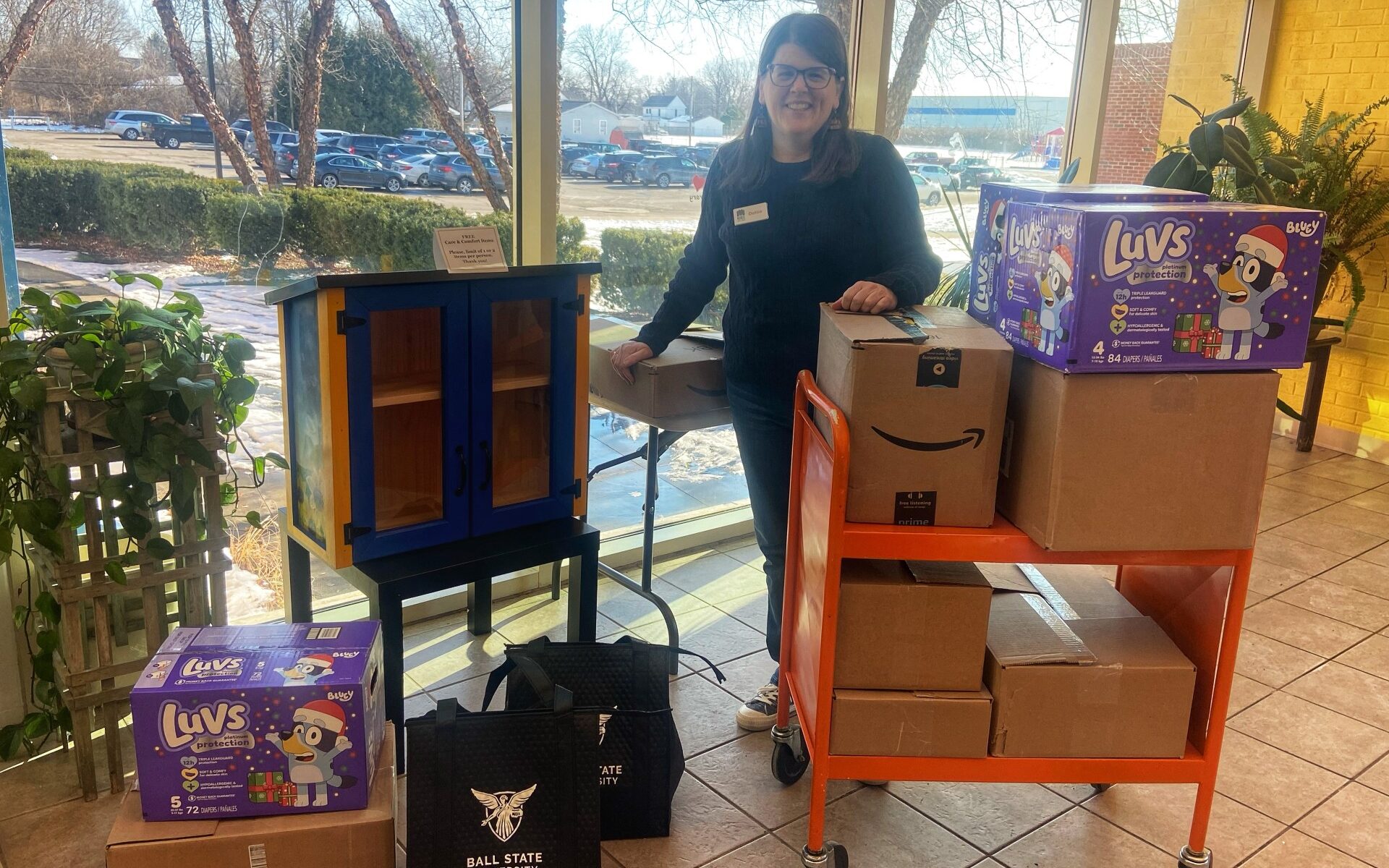
Dottie Kreps, Community Engagement Specialist accepting CPS donations for the Maring-Hunt Location

Article by Alexis Dishman | CenterPoint Scholars 2024-2025 cohort

When I was selected to be part of the inaugural CenterPoint Scholars 2024-2025 cohort, I knew the experience would be one of learning, growth, and collaboration. What I didn’t anticipate was how deeply meaningful the journey would become or that it would lead to the creation of a project rooted so strongly in empathy, dignity, and community connection.

As part of the program, we were tasked with forming small groups to identify and address a pressing need within our community. While there were many important issues to consider, our group quickly found common ground around one that felt both urgent and deeply personal: food insecurity.

Our conversations revealed that food insecurity looks different for everyone. For some, it meant growing up in a household where food was often scarce. Others shared experiences of needing just one or two ingredients to complete a meal. Some group members had never personally faced food insecurity but were eager to learn and understand its broader impact. Through open and honest dialogue, we began to recognize not only the lack of food itself, but also the stigma that too often accompanies asking for help.

From these discussions, The Helping House was born.

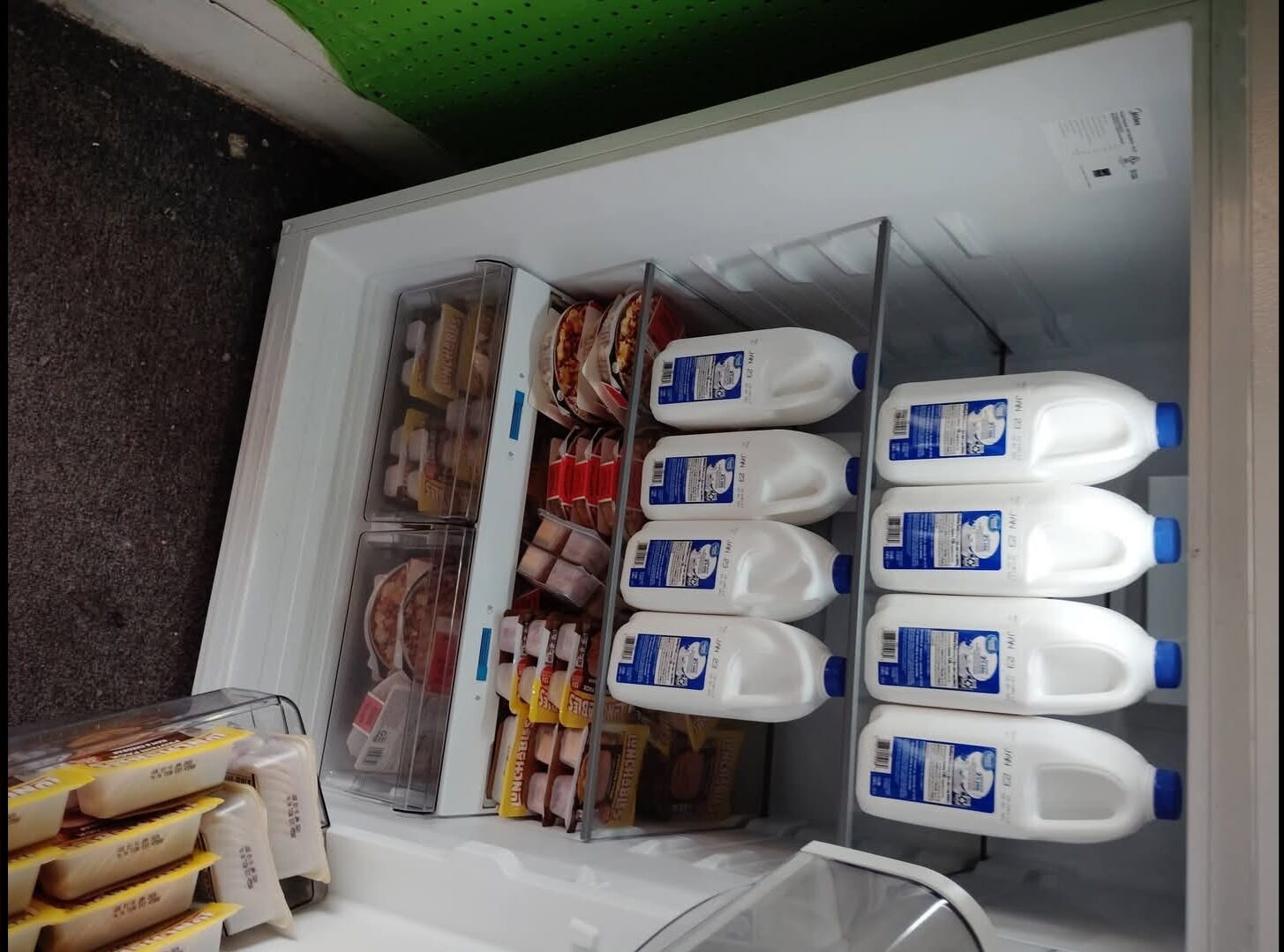
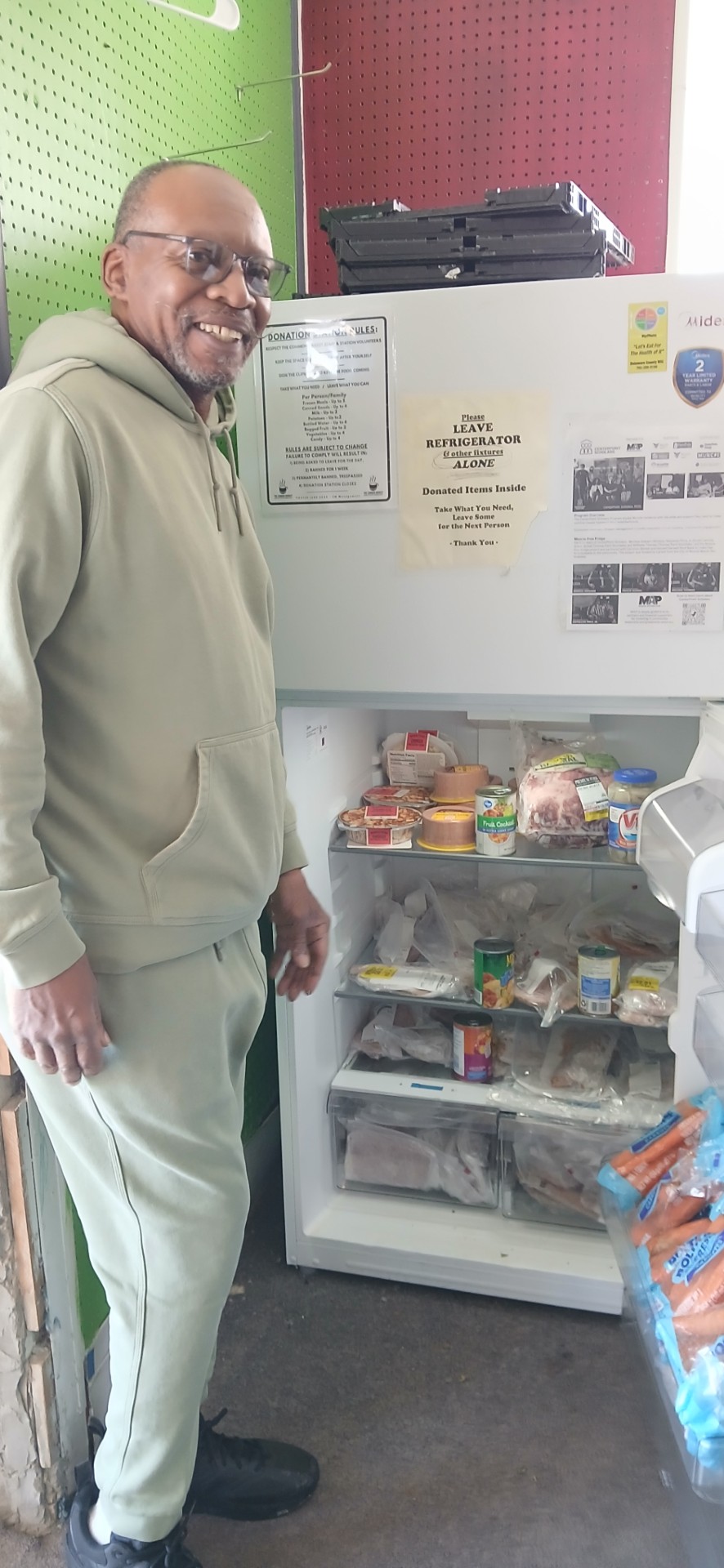
The Helping House is designed to address food insecurity in a way that is welcoming, accessible, and free of judgment. It offers a standalone structure where individuals can access non-perishable food items and hygiene products through a simple, respectful process that honors personal dignity and autonomy.

Each Helping House structure is painted with unique, vibrant scenes meant to spark curiosity, warmth, and engagement. These designs help shift the experience from one of need to one of connection, making the act of taking or exchanging food and hygiene items feel uplifting, human, and community-centered rather than transactional or stigmatizing.

Every detail of The Helping House was created with intention – including our logo. The calming blue color represents peace and stability, while the dove symbolizes hope, love, and new beginnings. What began as a group assignment quickly became a shared passion. Our planning meetings evolved into safe spaces for laughter, conversation, and genuine connection. The Helping House became more than a project, it became a reflection of the community we hoped to build.

The inspiration behind The Helping House comes from the concept of a Little Free Library – small neighborhood book exchanges where people are encouraged to take what they need and leave what they can. We embraced this honor-system model and reimagined it with non-perishable food and essential items, creating a space that is available, accessible, and rooted in trust.

Today, we are proud to have one Helping House structure in place at the Muncie Public Library / Maring-Hunt Library, with plans underway to establish a second location. Each new structure represents another opportunity to reduce barriers, meet needs, and strengthen community bonds.

Looking ahead, we are fully committed to keeping our Helping House structures stocked, maintained, and accessible for the long term. Our hope is to continue raising awareness about these resources while expanding their presence throughout the community. By installing additional structures and increasing visibility, we aim to ensure that more individuals know support is available quietly, consistently, and without judgment. The Helping House stands as a reminder that addressing food insecurity isn’t just about providing food, it’s about offering compassion, restoring dignity, and creating spaces where people feel supported and seen.

Our Helping House is now open at Muncie Public Library – Maring-Hunt Branch (2005 S. High St., Muncie, IN 47302). Community members are encouraged to donate items or take what they need. Learn more and follow our journey by visiting our Facebook Page – www.facebook.com/TheHelpingHouseMuncie


CenterPoint Scholars is a program of the Muncie Action Plan, funded through generous support from the CenterPoint Energy Foundation and the City of Muncie.

White River Canoe and Kayak Launch Sites

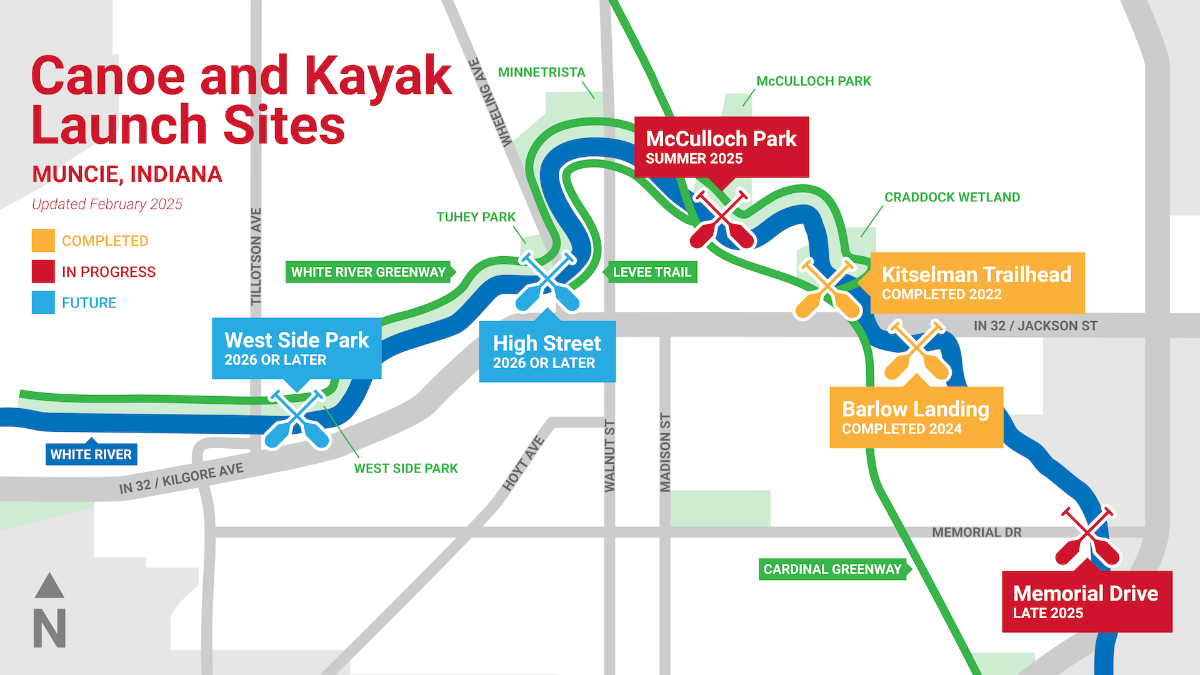
Map of the White River showing completed and future landing sites for canoes and kayaks
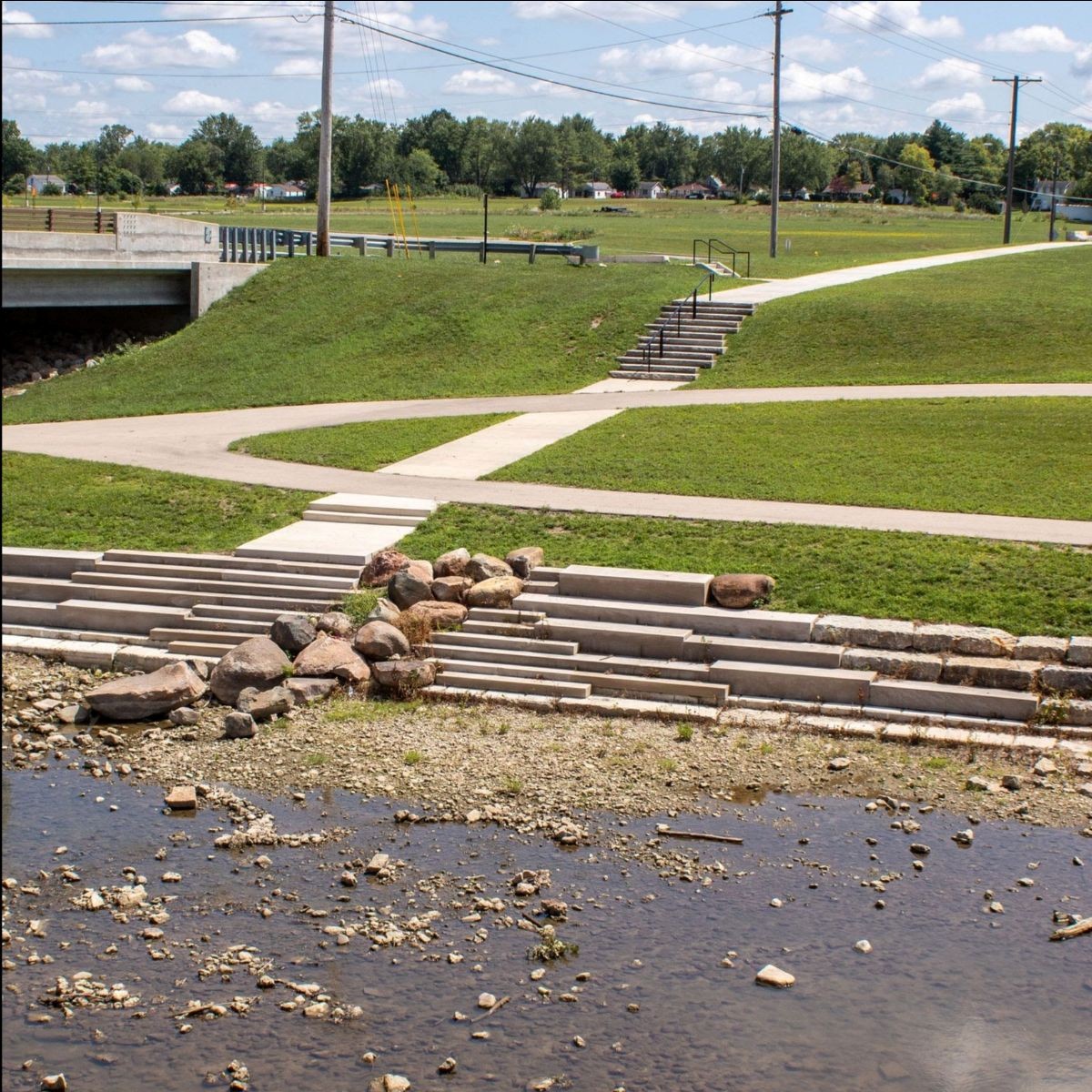
Kitselman Trailhead launch, completed in 2022. Photo by the Ball Brothers Foundation:

Did you know there are several new kayak and canoe launches located throughout Muncie?

There are! And several more in the works.

These launches are open to the public, so beat the heat this summer by grabbing a friend and bringing your favorite canoes and kayaks to one of these convenient spots.

Learn more about this and other cool projects aimed at championing our local waterways at the Ball Brothers Foundation Project Blueways page.


Check out more muncie neighborhood news and events:

Spinning Towards Inclusion – Morningside Park welcomes the We-Go-Round

A dome with vertical spokes sits on an attractive slab against the background of the rest of the park. It has seats inside and the backs of the seats are painted with seasonal motifs. Visible on the front are a winter scene with a deer and three snow-covered trees, and a scene with two trees and a variety of animals including a beaver and a wolf facing the center of the panel.

In an enchanting display of community spirit and dedication to inclusivity, the Morningside Neighborhood Association, in collaboration with Muncie Parks and Recreation, proudly unveiled the newest addition to Morningside Park – the We-Go-Round. This vibrant carousel of joy was brought to life thanks in part to the financing from ARP funds, showcasing a community’s commitment to creating shared spaces that celebrate the diversity of abilities.

The We-Go-Round, installed by Landscape Structures, is more than just a playground piece; it’s a revolutionary design that invites children of all abilities to whirl in unison. With strategic seating areas and plenty of space, the structure welcomes wheelchairs, even those without wheel-locking mechanisms, ensuring no child is left on the sidelines.

Mayor Ridenour stands with Neighborhood Association members in front of the new We-Go-Round. A man in the center of the group holds a large pair of black, ribbon-cutting scissors.

The ribbon was cut on Monday, October 16th, 2023, with Mayor Ridenour, Deputy Mayor Ivy, Superintendent Malone, Park Staff, Neighborhood Association members, and the Muncie Police Department in attendance. The We-Go-Round, with its shade-providing rooftop and central handhold, promises to be the hub of laughter and shared experiences.

We extend our heartfelt thanks to everyone involved in making this dream a reality.  Come visit, see the joy in motion, and let your hearts spin with delight at Morningside Park.

Kindness Rocks at Be My Neighbor Day

Four colorful baskets, each labeled with a different location, sit in the grass. Each contains many decorated rocks.

Building Better Neighborhoods hosted a booth at this year’s Be My Neighbor Day on June 10th, asking families to paint a rock and then choose where in the community they want it placed. These “Kindness Rocks” with their little pops of color and inspirational quotes are meant to brighten the day of those who find them. You can see these bright additions at Heekin Park’s Memory Spiral, Canon Commons, various MITS bus stops, the Cardinal Greenway Trailhead, Minnetrista’s Children’s Garden, and Westside Park. 

Promoting Dual Language Immersion

Screenshot of video showing a laptop screen advertising dual language education

In this project Advanced Spanish students collaborated with elementary schools to promote their dual language immersion (DLI) programs. Students explored the state of bilingualism in the U.S. and the benefits of programs like these to enable students in developing proficiency in both Spanish and English, strengthening academic learning and achievement, and cultivating intercultural sensitivity. The final community products included ten-week virtual reading/mentoring sessions in Spanish for 2nd graders, design and production of promotional materials to promote the benefits of dual language immersion programs, and Spanish translations of several procedure and policy documents for DLI programs to make more materials accessible to Spanish-speaking families. Blog Post | Digital Showcase 


Spring 2021 Semester

Faculty Mentor: Chin-Sook Pak
Department: Spanish
Community Partner: Muncie Community Schools
Students: Dani Allen, Rachel Armstrong, Madeline Backs, Jazmin Castillo-Soto, Bethany Elmore, Rebekah Hoffer, Amanda Huynh, Denise Jacquez, Jacob Newlin, Elizabeth Rieth, María Sanchez Cisneros, Darla Thomas, Peyton Thompson, Carl Torrence, Amy Wyse & Jerome Zirnheld


Fall 2020 Semester

Faculty Mentor: Chin-Sook Pak
Department: Spanish
Community Partners: Muncie Community Schools, West View Elementary
Students: Rachel Armstrong, Bethany Elmore, Bailey Fields, Joely Gause, Rebekah Hoffer, Denise Jacquez, Jordan Kasuboski, Cecilia Lambertson, Alexandra Martin, Justin Persinger, Maddie Ramsell, Elizabeth Rieth, Abigail Shaw, Grant Sturgis, Darla Thomas, Peyton Thompson, Jerome Zirnheld, Jenni Cruz, Edgar de Santiago, Karina de Santiago, Rosa Gonzalez, Stephanie Gutierrez, Hannah Hyde, Denise Jacquez, Lauren Lara, Diana Martinez, Daisy Mendoza, Alina Murrugarra, Ashley Navarro Rodriguez, Blanca Ortiz, Yatzari Perez-Muñoz, María Sanchez Cisneros & Isabelle Wright


Spring 2021 Ball State Immersive Learning Projects

Student studying the back of a solar panel

Ball State faculty, students, and community partners worked together this spring on a number of immersive learning projects in and around Muncie.

Anthony Northside Neighborhood Living Quality
Faculty Mentor:  Jason Yang, Department of Geography
Community Partner:  Muncie Action Plan, Anthony Northside Neighborhood Association

Brightfield to Bright Future
Faculty Mentor: Sanglim Yoo
Community Partner: Sierra Club Hoosier Chapter

More to come!