The Helping House: Building Community Through Compassion

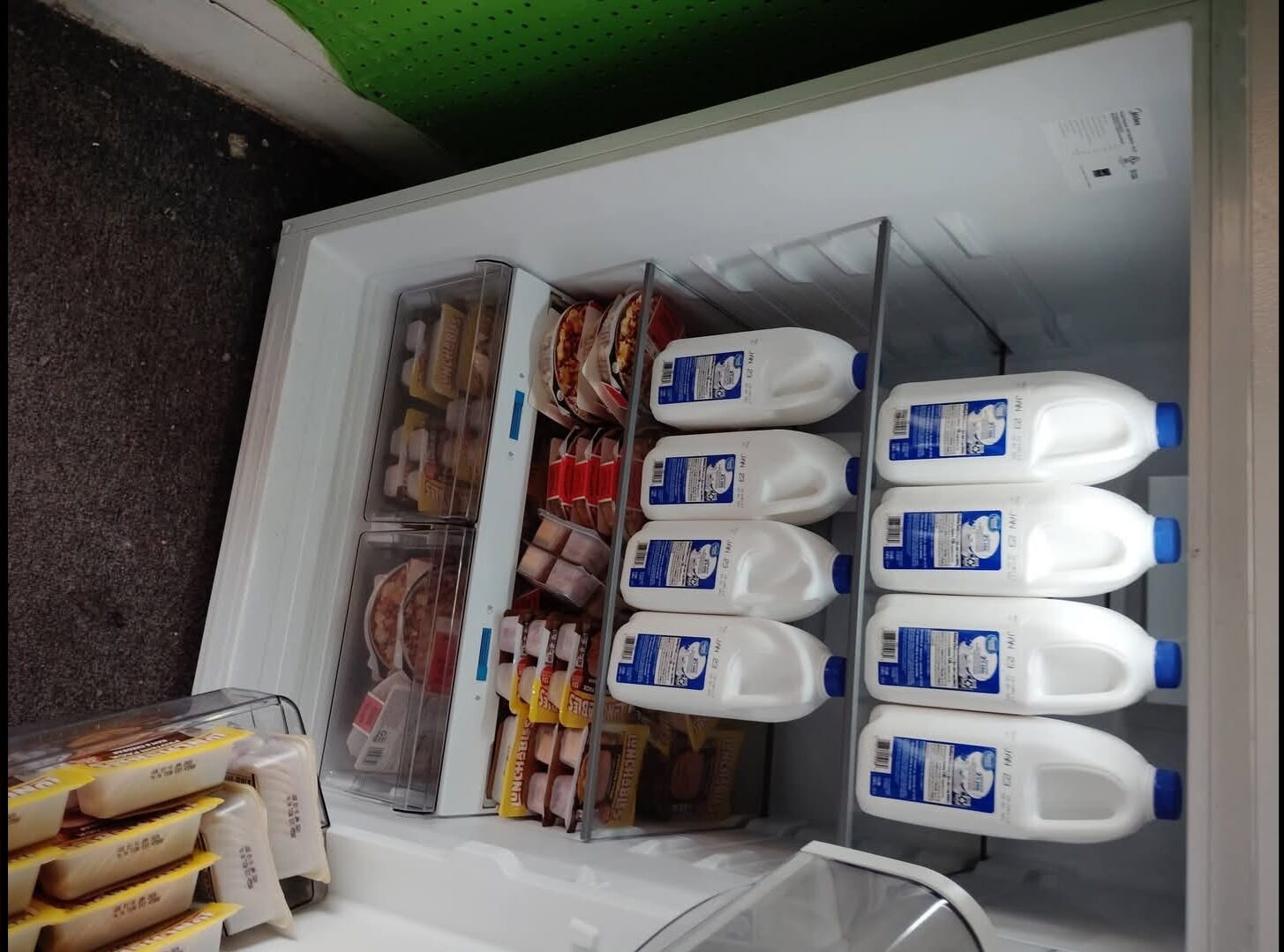
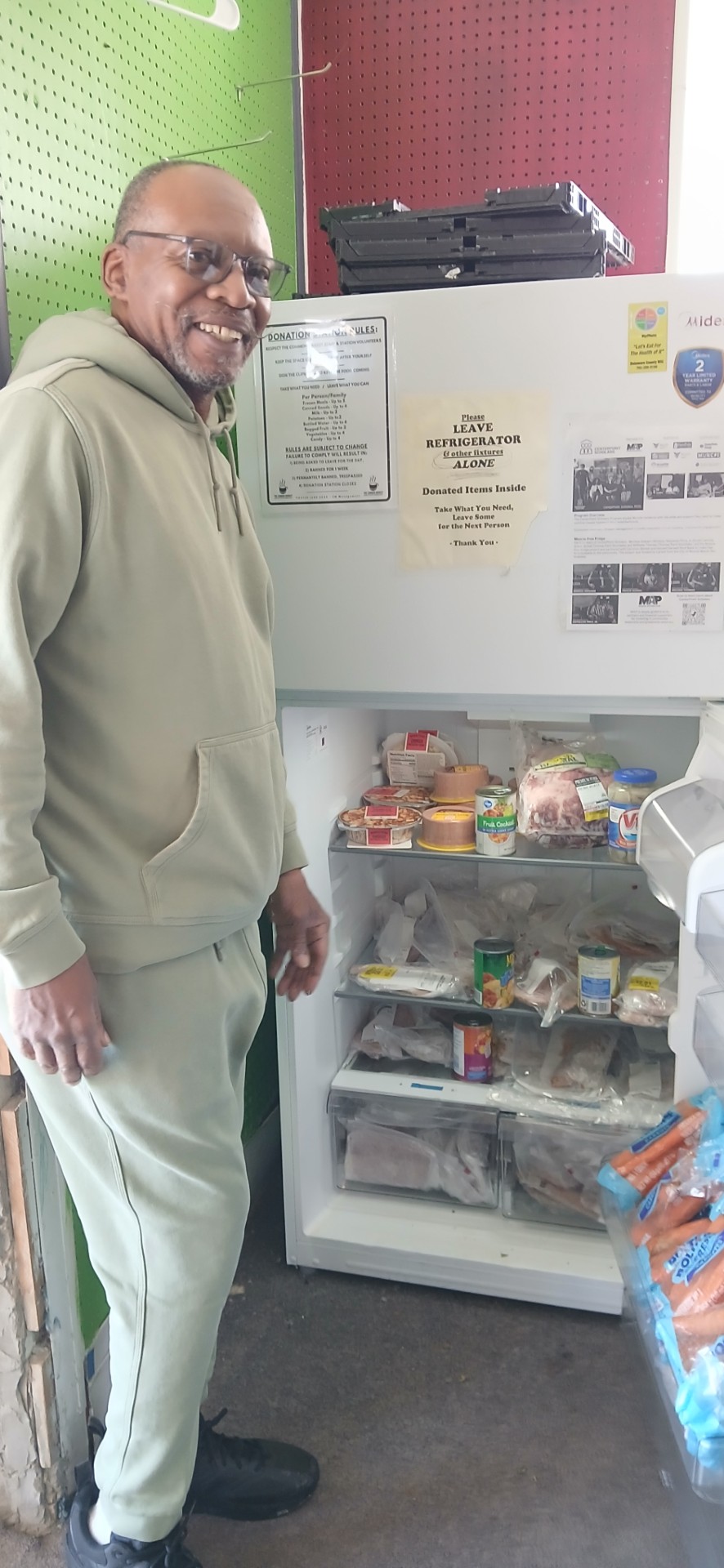
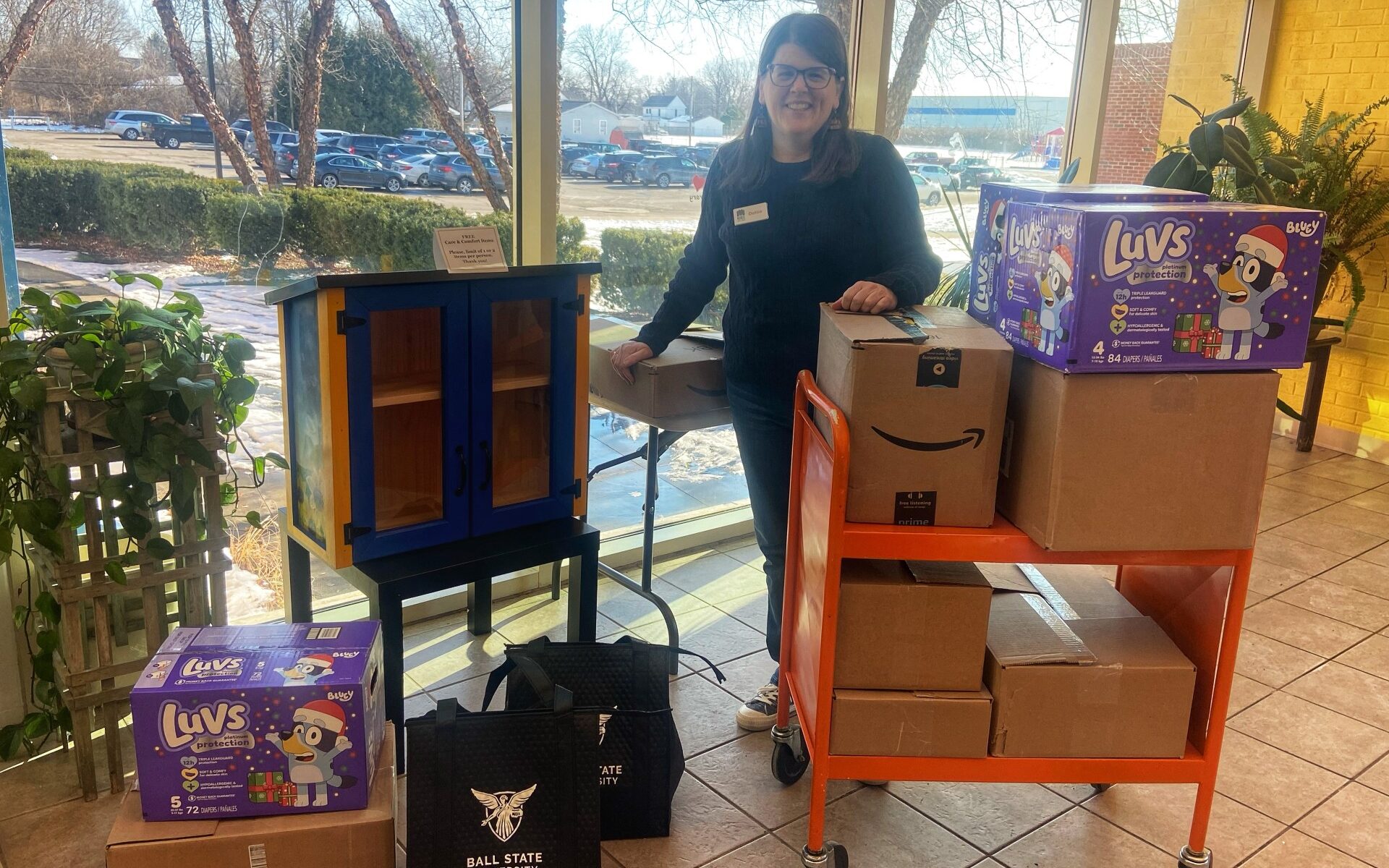
Dottie Kreps, Community Engagement Specialist accepting CPS donations for the Maring-Hunt Location

Article by Alexis Dishman | CenterPoint Scholars 2024-2025 cohort

When I was selected to be part of the inaugural CenterPoint Scholars 2024-2025 cohort, I knew the experience would be one of learning, growth, and collaboration. What I didn’t anticipate was how deeply meaningful the journey would become or that it would lead to the creation of a project rooted so strongly in empathy, dignity, and community connection.

As part of the program, we were tasked with forming small groups to identify and address a pressing need within our community. While there were many important issues to consider, our group quickly found common ground around one that felt both urgent and deeply personal: food insecurity.

Our conversations revealed that food insecurity looks different for everyone. For some, it meant growing up in a household where food was often scarce. Others shared experiences of needing just one or two ingredients to complete a meal. Some group members had never personally faced food insecurity but were eager to learn and understand its broader impact. Through open and honest dialogue, we began to recognize not only the lack of food itself, but also the stigma that too often accompanies asking for help.

From these discussions, The Helping House was born.

The Helping House is designed to address food insecurity in a way that is welcoming, accessible, and free of judgment. It offers a standalone structure where individuals can access non-perishable food items and hygiene products through a simple, respectful process that honors personal dignity and autonomy.

Each Helping House structure is painted with unique, vibrant scenes meant to spark curiosity, warmth, and engagement. These designs help shift the experience from one of need to one of connection, making the act of taking or exchanging food and hygiene items feel uplifting, human, and community-centered rather than transactional or stigmatizing.

Every detail of The Helping House was created with intention – including our logo. The calming blue color represents peace and stability, while the dove symbolizes hope, love, and new beginnings. What began as a group assignment quickly became a shared passion. Our planning meetings evolved into safe spaces for laughter, conversation, and genuine connection. The Helping House became more than a project, it became a reflection of the community we hoped to build.

The inspiration behind The Helping House comes from the concept of a Little Free Library – small neighborhood book exchanges where people are encouraged to take what they need and leave what they can. We embraced this honor-system model and reimagined it with non-perishable food and essential items, creating a space that is available, accessible, and rooted in trust.

Today, we are proud to have one Helping House structure in place at the Muncie Public Library / Maring-Hunt Library, with plans underway to establish a second location. Each new structure represents another opportunity to reduce barriers, meet needs, and strengthen community bonds.

Looking ahead, we are fully committed to keeping our Helping House structures stocked, maintained, and accessible for the long term. Our hope is to continue raising awareness about these resources while expanding their presence throughout the community. By installing additional structures and increasing visibility, we aim to ensure that more individuals know support is available quietly, consistently, and without judgment. The Helping House stands as a reminder that addressing food insecurity isn’t just about providing food, it’s about offering compassion, restoring dignity, and creating spaces where people feel supported and seen.

Our Helping House is now open at Muncie Public Library – Maring-Hunt Branch (2005 S. High St., Muncie, IN 47302). Community members are encouraged to donate items or take what they need. Learn more and follow our journey by visiting our Facebook Page – www.facebook.com/TheHelpingHouseMuncie


CenterPoint Scholars is a program of the Muncie Action Plan, funded through generous support from the CenterPoint Energy Foundation and the City of Muncie.

Welcome to the new class of 2025 CenterPoint Scholars!

Kiwani Pine, Rachael Robertson, Isabel Heimlich, Joseph Scholl III, Eliana Heimlich, Sam Atlas McCollum (Jasmine Taylor not in photo) Photo by Shantanu Suman

Kiwani Pine, Rachael Robertson, Isabel Heimlich, Joseph Scholl III, Eliana Heimlich, Sam Atlas McCollum (Jasmine Taylor not in photo)
Photo by Shantanu Suman

Welcoming the Second Cohort of CenterPoint Scholars

Since 2010, Muncie Action Plan (MAP) has been supporting neighborhood leaders through its Neighborhood Leadership Council. In October 2023, MAP expanded this commitment by launching a new initiative—thanks to a generous grant from CenterPoint Energy—to train emerging leaders in grassroots advocacy. This initiative, the CenterPoint Scholars Program, offers a year-long leadership development experience focused on building skills that directly impact Muncie’s neighborhoods.

The program began with a competitive application process in January, and the second cohort of Scholars was officially introduced at the March 2025 IDEA Conference. In April, the Scholars participated in a weekend retreat at highlighted locations in Muncie to kick off the program. This retreat laid the groundwork for a year of learning, connection, and community impact.

We are excited to welcome our second cohort of CenterPoint Scholars:

This class of CenterPoint Scholars is exploring topics like project management, conflict resolution, and trust building, all while working on neighborhood-based projects designed to create lasting, positive change. They are joining our Neighborhood Leadership Council in monthly trainings from March 2025 through March 2026, and their efforts will culminate in a final presentation led by the Scholars at the 2026 IDEA Conference. MAP is proud to support these emerging leaders and excited to see the impact of their work across our community.

For more information about the CenterPoint Scholars Program, visit muncieneighborhoods.org/centerpoint-scholars.

White River Canoe and Kayak Launch Sites

Map of the White River showing completed and future landing sites for canoes and kayaks
Kitselman Trailhead launch, completed in 2022. Photo by the Ball Brothers Foundation:

Did you know there are several new kayak and canoe launches located throughout Muncie?

There are! And several more in the works.

These launches are open to the public, so beat the heat this summer by grabbing a friend and bringing your favorite canoes and kayaks to one of these convenient spots.

Learn more about this and other cool projects aimed at championing our local waterways at the Ball Brothers Foundation Project Blueways page.


Check out more muncie neighborhood news and events:

Neighborhood Associations Matter

Heat map image showing the progression of activity among Muncie's neighborhoods from 2014 to 2024

Building Better Neighborhoods (BBN) was created in 2014 to provide a bridge between the resources of Ball State University and the needs of Muncie’s neighborhoods. Over the last eleven years, the program has helped neighborhoods across the city develop strong neighborhood associations and that work is tracked annually using the “Spectrum of Development”. The Spectrum survey asks neighborhoods to self-report on a number of development factors like whether they have an elected Board of Directors, if they meet regularly, and how they communicate with their residents. This information allows BBN to develop trainings that match the needs of the neighborhoods to assist them in moving along the Spectrum if that is their collective wish.

Why do functioning neighborhood associations matter? Because they facilitate achieving common goals by providing a single, unified voice for the neighborhood. Associations improve quality of life by organizing and helping residents work towards preservation and improvements within the neighborhoods. And they build community by planning and holding social events that bring neighbors together.

If you would like to get involved in your area, but don’t know where to start, choose your neighborhood from this list to learn more, or contact your neighborhood leader.

Spring Cleanups

It’s time to clean! MSD is partnering with our neighborhoods this May to help clean up our streets and alleys. If your neighborhood is not hosting an event, please consider volunteering to help another neighborhood. Facebook events are linked when available.

May 3rd

Old West End – 7:45 AM | Meet at Clifton-Wallace Park

Industry – 7:45 AM | Meet in Heekin Park at corner of 9th & Penn

Thomas Park/Avondale – 7:45 AM | Meet at Thomas Park

South Central – 7:45 AM | Meet at the Community Garden on 7th St.

May 10th

McKinnley – 8:00 AM | Meet at the Daycare on Columbus Ave.

Riverside/Normal City – 7:45 AM | Meet at Grace Evangelical Lutheran Church

Morningside/McCormick

Whitely – 8:00 AM | Meet at the Buley Center

May 17th

Southside – 7:45 AM | Meet at Frankie D’s Flea Market

East Central – 7:45 AM | Meet at the corner of Vine and Main