

When? March 7, 2026
Where? Student Center, Second Floor Ballroom
Cost? As always, it’s FREE!
IDEA 2026
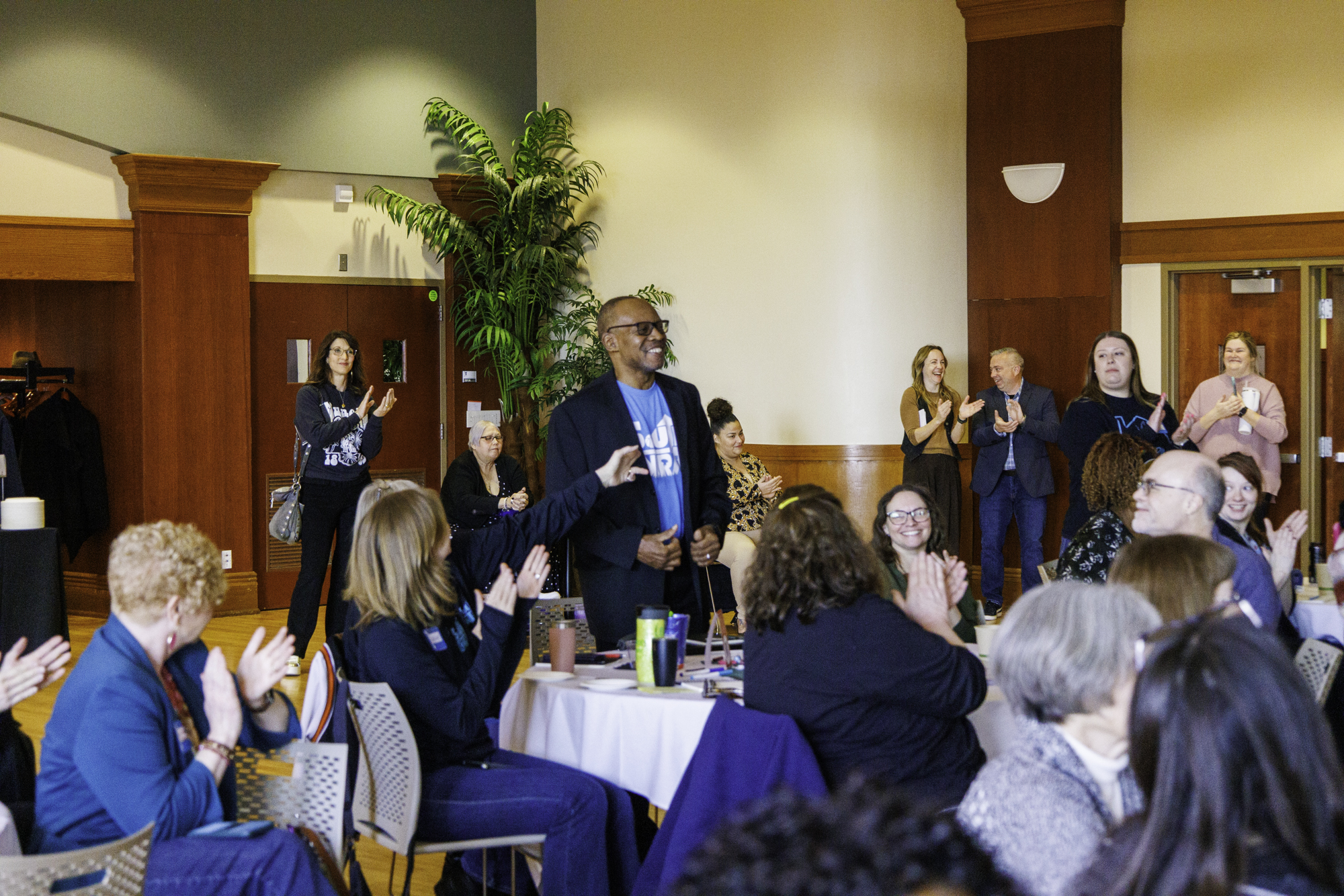
Hosted by the Muncie Action Plan, Shafer Leadership Academy, Building Better Neighborhoods, and the Ball State Office of Community Engagement, IDEA brings together more than 130 residents from over 30 active neighborhoods for a full day of inspiration, learning, action, and celebration. For 10 years, the conference has united neighbors, volunteers, local leaders, nonprofits, foundations, and experts passionate about strengthening Muncie’s communities.
This year’s theme, Brought to You by the Number Eleven, is all about giving neighborhood leaders the tools they need to succeed. Sessions will focus on community conversations, counting success, taking action, healthcare and more!
IDEA is more than a conference; it’s a platform for local change. Attendees gain access to the people, projects, and knowledge that are driving improvements in Muncie. It’s a chance to meet fellow changemakers, share your experience, and help grow the next generation of neighborhood leaders. Organizers emphasize that strong neighborhoods require many hands, and your voice matters.
On our street, everyone is welcome!
Brought to you By:


2026 Agenda: On our street, everyone is welcome!
Breakout sessions are color coded by track:
- 1-2-3 Ha, Ha, Ha! – Forum Room
- Counting Success – Cardinal Hall B
- “A” is for “Action”! – Cardinal Hall A
- One of These Things is Not Like the Other – Pineshelf Room
| Time/Room | Title/Session | Speaker(s) |
| 9:00-9:30 AM Music Lounge | Registration, Continental Breakfast, and Vendor Fair | |
| 9:30-9:50 AM Ballroom | Opening Remarks & Welcome | IDEA Conference Facilitators |
| 10:00-10:50 AM | Breakout Sessions (choose one) | Various |
The Whitely Way: Learning & Education about a Neighborhood with a Board Game – Forum Room
Presenters: Frank Scott & Jorn Seemann
Board games offer an engaging approach to learning about history, culture, strategy, discipline, and critical thinking. In this session, you’ll discover a game created by Whitely residents that connects different generations while celebrating the neighborhood’s rich history in an enjoyable way.
This game allows you to step into the heart of Whitely, where every street tells a story, and every corner holds a piece of history. The Whitely Way is more than a game – it’s a celebration of the people, places, and powerful moments that have shaped this vibrant community.
As you move around the board, you’ll discover historic landmarks, meet local heroes, and uncover the cultural wealth that makes Whitely a source of pride. From churches that nurture generations to businesses that build resilience, each space invites you to learn, reflect, and connect.
This game was created to honor the legacy of Whitely and inspire a deeper appreciation for its past, present, and future. But its development can be a template for other neighborhoods, businesses, even families as a fun creative way to ensure history, valuable moments, events and notable people are not only recorded and remembered but also appreciated but celebrated.
A Memory of Muncie: Understanding the City We Have, Building the City We Want – Cardinal Hall B
Presenter: Colby Gray
Muncie’s quality of place didn’t happen by accident, it’s the long-term result of decades of infrastructure growth, rising maintenance responsibilities, and development patterns that change slowly and compound over time. This presentation tells Muncie’s growth story through an infrastructure lens, explains why real change can’t happen overnight, and argues that this reality isn’t hopeless—it’s manageable. It closes with a practical, non-political path forward: create public dashboards and education efforts that make infrastructure tradeoffs easier to understand, require a simple “infrastructure acknowledgement” for major development decisions, archive key decisions for transparency and accountability, and invest in planning and GIS capacity that supports long-term recovery and smarter investment.
Using Signs to Promote Respect and Assistance – Cardinal Hall A
Presenter: Brad King
The OWENA’s Social Programs Signs Project is part informational and part placemaking. The concept was to use existing NO PARKING signs posted throughout the neighborhood and post signs to their backs. These signs would be the same size as the existing signs and are made of the same aluminum material and thickness. There are two tracks of signs: one is information and the other placemaking. The informational signs have QR codes leading to Google maps showing the location of services in the city of addiction, domestic violence (phone only), health food, homelessness, and literacy. The placemaking signs have uplifting sayings and designs like “The Things that Count the Most Cannot Be Counted,” or “Kindness Costs Nothing but Means Everything.” The project was created in order to get resources to neighbors in need, place colorful uplifting art in the neighborhood, and focus on our pedestrian (and bicycling) neighbors, hence using the back of existing signs. The program was supported by Addictions Coalition of Delaware County, the Muncie Mission, Muncie Community Schools, and the City. Kim Miller of Tribune Showprint created the placemaking designs and printed all the signs. The project was a Neighborhoods USA Neighborhood Project of the Year finalist.
Grant Writing 101 – Pineshelf Room
Presenter: Donna Browne
Are you new to grant writing? Do you want to brush up your skills? Grant Writing 101 takes you through preparing a typical grant proposal, including preparation, what information to include, developing goals and objectives, writing tips, creating a project budget, and time management. This session will demystify the grant writing process, teach essential skills to get you started, and address some commonly held misconceptions about grant seeking.
| 11:00-11:50 AM | Breakout Sessions (choose one) | Various |
CenterPoint Scholars Present: Let’s talk, read, dance, and play together! – Forum Room
Presenters: 25-26 CenterPoint Scholars
Our 2025-2026 CenterPoint Scholars have been working all year developing projects that center on neighborhood communication and connection. Join us for a brief presentation followed by an opportunity to participate in hands-on experiences to get you sharing and connecting with your neighbors.
Muncie Land Bank Updates: Tax Sale Research, READI 2.0 & Neighborhood Partnerships – Cardinal Hall B
Presenter: Nate Howard
The Muncie Land Bank works at the intersection of property abandonment, neighborhood revitalization, and community development. This session will provide an accessible overview of the property tax sale system, including its functions, outcomes, and its effect on long-term neighborhood success. Participants will gain a grounded understanding of how tax sales influence vacancy patterns, the movement of distressed properties, and the involvement of various buyers and investors.
In addition, attendees will receive updates about efforts in the Old West End, READI 2.0, the 8twelve Coalition, and the Industry & Whitely neighborhoods. These updates will highlight how partnerships, planning, and community priorities are shaping the Land Bank’s work, as well as how the organization is using data and collaboration to support neighborhood goals.
What Do You Know About the Actions of Your City and County Government? – Cardinal Hall A
Presenter: Sheryl Swingley
Accountability and transparency are important issues in governance, but when a community’s local newspaper lacks the resources to cover politicians’ actions, it’s time for citizens to get involved.
At least four organizations in Muncie have been discussing how to share information with residents about governmental actions. They are the American Association of University Women Muncie Branch, the Experienced Educators of East Central Indiana, the League of Women Voters of Muncie-Delaware County and Muncie Resists.
Each of these groups has an observer corps. The concept is simple. Members of these groups attend meetings and write reports about what happened. Neighborhood associations also could form an observer corps, too.
During this session, attendees will be asked about what they expect from city and county governmental bodies, how they would like to receive information about actions that these bodies take and what their roles might be in one of the organizations’ observer corps.
Healthcare 11 – Eleven Essentials One Stronger Community – Cancelled
Presenter: Brandi Carden
Oh no! Our session had to be cancelled – we sure are sorry.
| 12:00-12:50 PM Ballroom | Lunch State of the City | Mayor Dan Ridenour |
| 1:00-1:55 PM | Session Block Three | Various |
A Seat on the Stoop: Community Conversations – Forum Room
Presenters: 25-26 CenterPoint Scholars
Pull up a chair and join a relaxed, neighbor-to-neighbor conversation about what’s happening in our communities. Local stakeholders will be seated at the tables alongside participants to listen, learn, and share perspectives. This session is about understanding each other and figuring things out together.
Follow That Data! Closing the Feedback Loop – Cardinal Hall B
Presenter: Jena Ashby
Feedback is everywhere—but turning it into something useful can feel like solving a mystery. In this session, we’ll walk step-by-step through the full feedback journey: how to ask the right questions, gather meaningful input, make sense of what the data is really telling you, and turn insights into a clear, actionable plan.
Participants will learn practical ways to organize and analyze feedback without getting overwhelmed, identify patterns and priorities, and decide what to do next. We’ll also cover how to close the loop—reporting results in a way that’s clear, engaging, and builds trust with your audience.
Whether you’re working with surveys, interviews, or informal feedback, you’ll leave with a simple, repeatable framework for listening better, learning faster, and turning feedback into action.
Delaware County’s New Vote Center – Cardinal Hall A
Presenter: Andrew Dale
In September 2025, a voting center plan was adopted by the Delaware County Election Board. Vote center voting is not uncommon in Indiana but is new to Muncie and Delaware County. This session will provide information that articulates how vote center voting works, locations for selected voting sites, as well as early voting locations, and highlights the measures to be taken to inform the public ahead of both the 2026 May primary and November elections.
By way of an unbiased and fact-based presentation, Andrew Dale, Chairperson of the Delaware County Democratic Party, Tim Overton, Chairperson of the Delaware County Republican Party, Linda Hanson, President of the League of Women Voters of Indiana and Rick Spangler, Delaware County Clerk, will provide insight into the process of adopting Delaware County’s vote center plan and the basics of how voters can easily access both information about vote centers and polling sites come election time.
The Impact of Social Connection on Health – Pineshelf Room
Presenter: Theresa Mince
Connections with our neighbors provide more than just friendly faces and passing hellos; social connection creates positive impacts on our mental and physical health. Social connections are the ties that bind us to one another, to our community, and to our health. Our health suffers or thrives depending on how connected we are.
Research shows that the health impacts of loneliness are equivalent to smoking fifteen cigarettes a day, and social isolation increases the risk of early death by 29%. Social connection impacts community health, too. When there are high levels of social isolation in communities, community safety and economic prosperity decline.
In this interactive session, participants will learn more about the impact of social connections on health, ways to connect with neighbors, and how social infrastructure can improve their neighborhood’s overall health and well-being. This session is ideal for anyone interested in improving their own health and the health of their community.
| 2:00-3:30 PM Ballroom | Afternoon Announcements and Awards |
Funding Generously Provided by:


Neighborhood Awards Sponsored by:


Questions?
Contact Krista Flynn, BSU Office of Community Engagement at kflynn@bsu.edu.